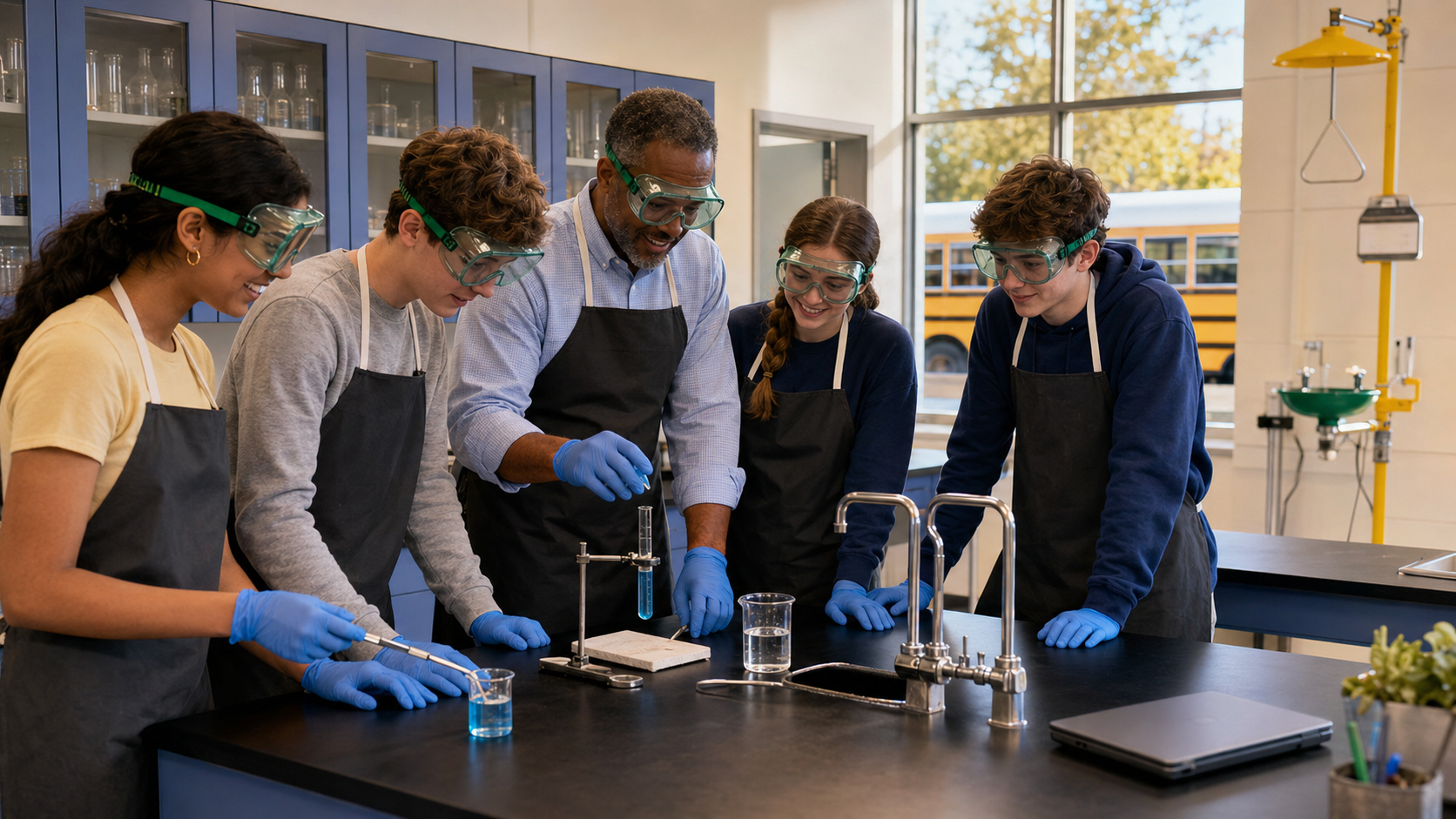



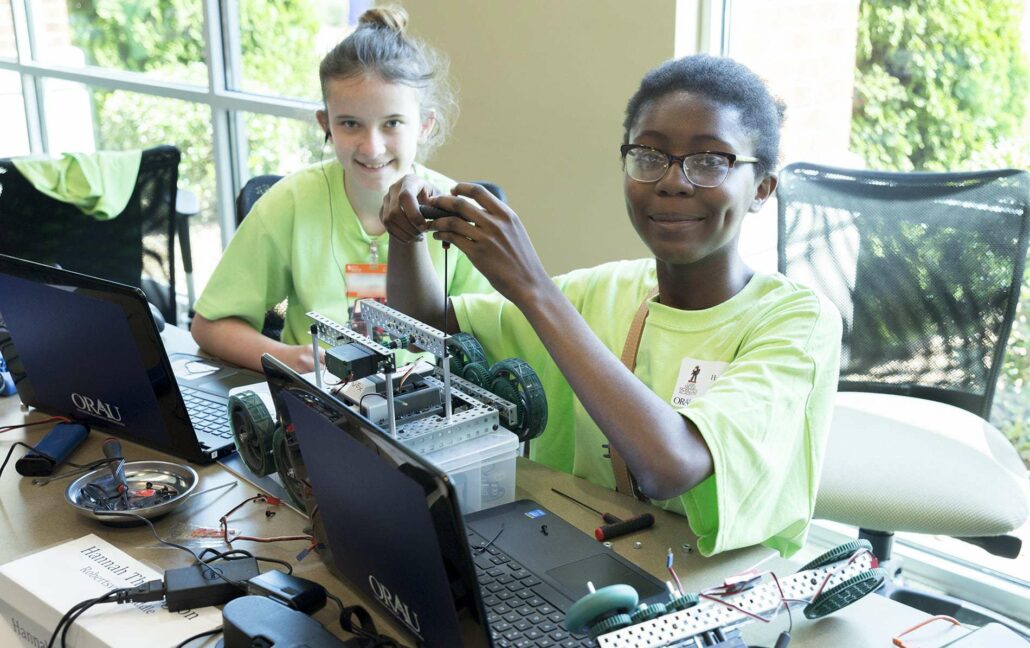
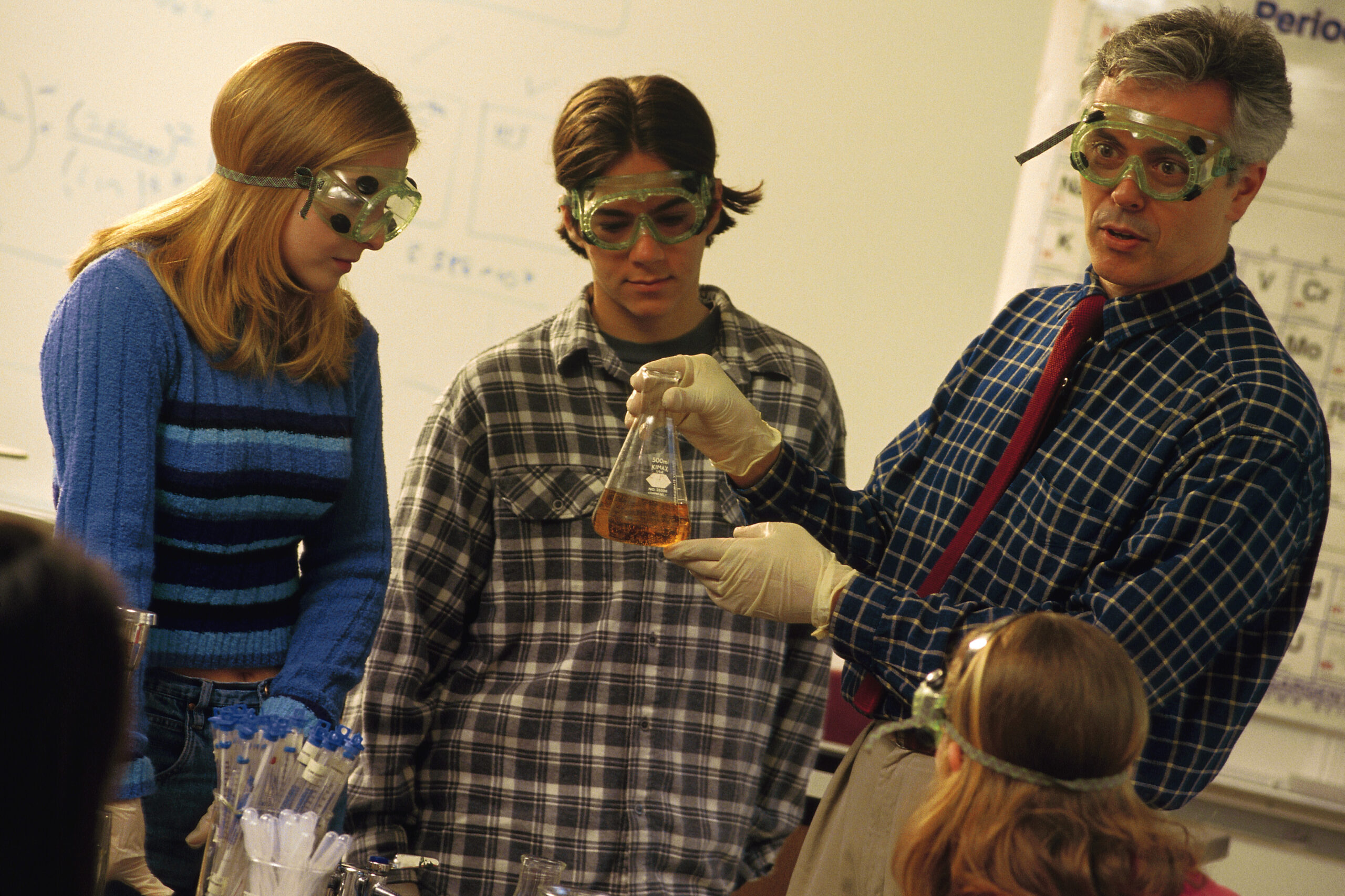
SAFETY TRAINING BUILT FOR STUDENTS
A safety contract is a signature. Safety training is a student who knows why the goggles stay on, what the yellow diamond means, where the eyewash is, and what to do when the beaker breaks. Science Safety’s student modules are written at the student’s reading level, by grade and by subject, in short lessons a class finishes in one sitting. The teacher assigns them, the student completes them, and the certificate goes in the file before the first lab.
Science, STEM, CTE, arts and cyber safety for students, elementary through high school. Built to the Science Safety Teaching Standard.

Written to the student, not read to them
Most student safety training is the teacher reading the rules aloud on the first day and a form going home for a signature. Ninth-grade science labs have the highest accident rate of any science classroom, and the students in them have never handled a burner, an acid or a scalpel before. Science Safety’s student modules do the teaching: each one a short course on one subject or one space, with real situations, a decision to make before the answer is shown, a quiz passed at 80 percent, and a certificate.
The modules are written at the student tier of the Science Safety Teaching Standard, so a seventh grader and a senior each get a module they can read, and a teacher gets a record for every student.
Elementary Student Safety Training Pathway
Grades 1 to 6: the first science and STEAM equipment a child meets, and the habits that keep hands, eyes and classmates safe.
Middle School Student Science Safety Training Pathway
General safety and the specific ones that arrive in grades 6 to 8: robotics, heat sources, chemicals and tools, written for the student who is meeting them.
High School Student Safety Pathway
The procedures and policies behind a safe science classroom, for the student who will spend four years in labs and the teacher who signs them in.

What a student module teaches
- The hazard in plain words: what this chemical, tool or machine can do to a person
- The rule and the reason: goggles, gloves, closed shoes, tied hair, and why each one exists
- Reading the label, the safety data sheet and the warning sign before touching anything
- Where the eyewash, shower, extinguisher and exits are, and when to use them
- What to do when something goes wrong: a spill, a cut, a burn, a fire, a broken slide
- The decision practice: a real situation, a choice, then the answer and the reason
- A quiz passed at 80 percent and a certificate the teacher can file

Students are not covered by OSHA. That is why the training has to be the school’s.
Federal laboratory and hazard communication rules protect employees. They do not reach the student at the bench. What reaches the student is the school’s duty of care, the state eye-protection law, the safety contract and the instruction the teacher can show was given before the first hazardous activity. When an accident is reviewed, the question is whether the student was taught, not whether a form was signed.
Science Safety’s student modules produce that record: each student’s own completion and certificate, dated, for every subject and space they work in.
Student modules by subject and space
- 9th Grade Science Lab Safety: Reduce Risks
- Chemistry Lab Safety for Students
- Chemistry Students Safety Pathway
- General Science Safety for Secondary Students
- Chemistry Safety for International Baccalaureate Students
- Biology Safety for International Baccalaureate Students
- Physics Safety for International Baccalaureate Students
- CTE Safety Training for High School Students
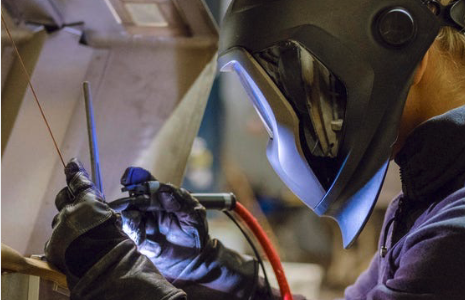
- CTE Student Safety Metal Shop Pathway
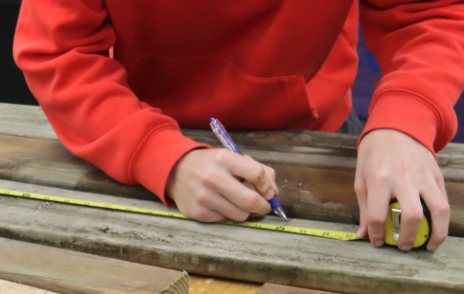
- CTE Student Safety for Woodshop and Construction Lab Pathway
- Visual Arts Safety for Students
- Cybersecurity and Digital Citizenship Pathway for High School Students
- Cybersecurity and Digital Citizenship Pathway for Middle School Students
- Flex Safety Modules: assign any mix of science, STEM, CTE, cyber and arts modules to your students
For teachers: the form is not the training
Who assigns these modules
- Science, STEM and chemistry teachers before the first lab
- CTE teachers before the first day in the shop
- Art teachers running studios with kilns, solvents and tools
- Technology teachers and media specialists for digital citizenship
- Department chairs and principals who want every student on record
- Homeschool families and after-school programs with hands-on science

Ask Yourself
Can every student in your lab say where the eyewash is and what it is for?
Did the students sign the safety contract before or after they were taught what it means?
What record do you hold for each student showing they were trained for this space?
Which students in your shop or studio have handled a tool before this year?
If a student is hurt tomorrow, what shows the instruction was given?

Frequently Asked Questions
Through a group or class enrollment. The teacher buys the seats, students sign in with their own accounts, and the teacher sees who has started, who has finished and who passed. Flex Safety Modules lets a school assign any mix of science, STEM, CTE, cyber and arts modules from one purchase.
The student tier of the Science Safety Teaching Standard: middle school modules at a grade 7 to 8 level, high school and International Baccalaureate modules at grade 9 to 10. Every rule is explained with its reason, in plain words.
Yes. Each module and pathway ends in a quiz passed at 80 percent and a certificate in the student’s name, which the teacher can file as the training record for that student and that space.
No. The contract records that the student agreed. The module records that the student was taught. Schools use both, and Student Safety Rules and Forms explains how the two work together.
Every student module
The full student catalog across science, STEM, CTE, arts and cyber safety, elementary through high school. Open any module to see its lessons.