Safer Science and Safer STEM classrooms—whether filled with chemicals, heat sources, engineering tools, or digital fabrication equipment—are inherently high-risk environments. Veteran teachers typically manage this landscape through years of experience, but new educators often enter their first classrooms without the safety training necessary to prevent avoidable incidents.
According to Science Safety’s national webinar data, more than one-third of new science and STEM teachers report receiving little to no formal safety training before stepping into the classroom. First-year teachers are significantly more likely to encounter issues such as chemical spills, equipment misuse, PPE violations, or unsafe lab setups—not because they are careless, but because they’ve never been taught the safety systems the job requires.
The Safety Training Gap: What New Teachers Aren’t Getting
Most teacher preparation programs emphasize instructional planning, pedagogy, assessment, and classroom management. What they don’t emphasize is:
Hazard identification
Chemical hygiene
Engineering and makerspace safety
Lab supervision strategies
Physical space and equipment awareness
Regulations that govern K–12 science operations
As a result, it’s common for new hires to begin the school year:
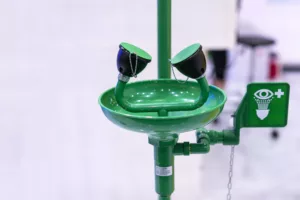
Without knowing how to test an eyewash or safety shower
Unfamiliar with local, state, or federal science safety requirements
Unsure how to interpret chemical labels or SDS sheets
Lacking confidence in enforcing student safety behavior
Unable to identify unsafe storage, expired chemicals, or blocked exits
This gap leaves early-career teachers vulnerable—and puts students at unnecessary risk.
The Hidden Costs: Legal, Emotional, and Instructional Impact
Safety failures in STEM classrooms aren’t just “accidents.” They ripple across the entire school ecosystem.
Consequences can include:
Legal and liability exposure for schools and districts
Emotional strain or burnout for new teachers already juggling steep learning curves
Interrupted instruction when labs are paused, shut down, or investigated
Damage to student trust and engagement when learning environments feel unsafe
Many new teachers describe their early months in the lab as “isolating,” “overwhelming,” or “unclear”—especially when classroom management intersects with materials, equipment, and unpredictable student behavior.
The transition into hands-on learning environments like biology labs, robotics rooms, or makerspaces can challenge even the most enthusiastic teachers.
Safer STEM Strategies: What Schools Can Implement Right Now
District leaders, principals, and department chairs can dramatically reduce risk by shifting from reactive responses to proactive, systematic safety support.
1. Require Early—and Ongoing—Safety Training
No teacher should enter a lab setting before completing structured safety training.
Effective onboarding includes:
Hazard recognition
PPE selection and use
Chemical labeling, storage, and disposal
Equipment safety protocols
Emergency response: spills, fires, exposures
Space setup and facility checks
Training should be refreshed yearly and aligned with federal/state regulations.
Pro Tip: Incorporate tabletop simulations for fire events, chemical exposures, or emergency evacuations. Practice builds confidence.
2. Implement a Mentorship Model with Veteran Science Teachers
Pairing a new science teacher with an experienced mentor is one of the most effective safety investments districts can make.
Mentors can model:
Lab prep, setup, and cleanup
Storage room organization
Pre-lab safety briefings
Student expectations and behavior enforcement
Equipment testing routines
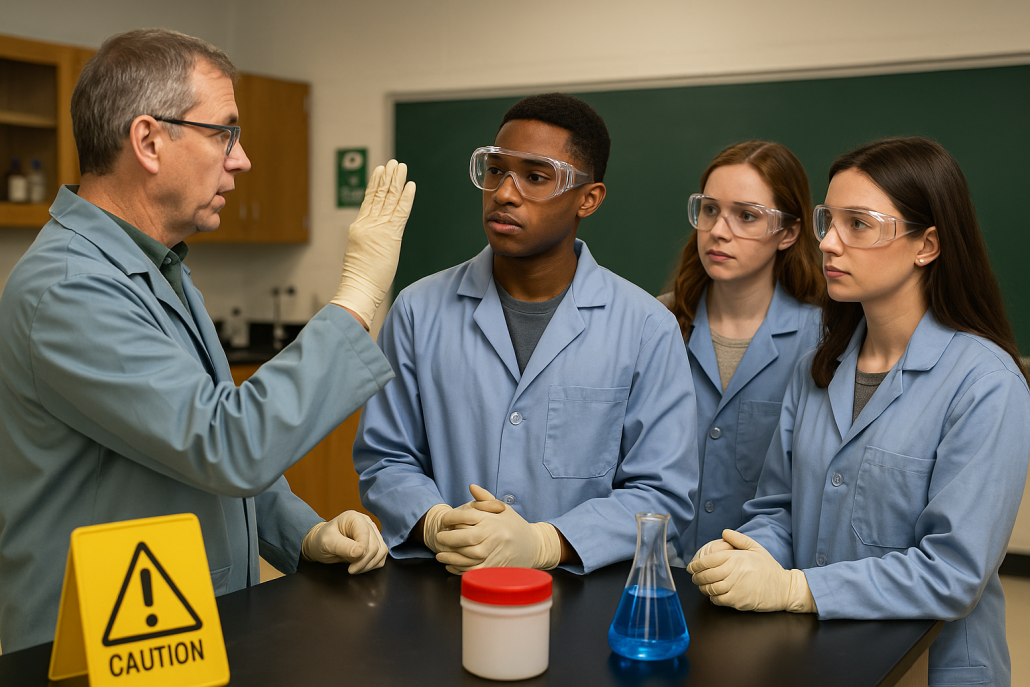
Encourage co-teaching or observation periods during early labs so new teachers can see safety protocols in action.
Safety is not intuitive—it’s learned through guided experience.
3. Require Safety Acknowledgments and Provide SOP Documentation
Just like employees in industry, teachers should formally acknowledge that they understand and agree to follow safety requirements.
Schools should provide:
District-wide safety policies
Standard Operating Procedures (SOPs) for all lab activities
Evacuation routes and emergency equipment maps
Chemical spill and first-aid procedures
Have new teachers maintain a safety binder or digital folder for quick reference.
4. Include New Teachers in Facility Walkthroughs and Annual Inspections
Bringing a first-year teacher into a safety inspection builds familiarity with the environment and systems they will soon supervise.
Include them in:
Chemical inventory processes
Ventilation and fume hood checks
Storage audits
Equipment inspections
Emergency equipment testing
Create a simple mechanism—anonymous if necessary—for teachers to submit safety questions or concerns.
5. Build a Culture of Comfort + Accountability
A safe school is one where teachers feel encouraged to:
Ask questions
Delay a lab if something feels unsafe
Request guidance
Report concerns without judgment
“Comfort-building” professional development can happen during orientation week, department meetings, or PLC time.
Emphasize that pausing an experiment is better than risking an incident.
The Results: What the Data Shows
Schools that implement structured science safety onboarding and mentorship report:
51% reduction in lab accidents during the first year
Higher retention rates among new science educators
More confident classroom management, especially during labs
Improved student engagement, because labs run smoothly and safely
Safety preparedness is teacher retention. It’s instructional quality. It’s student well-being.
Administrative Action Plan: A 30–60–90 Day Roadmap
| Timeline | Action Steps |
|---|---|
| First 30 Days | Audit current safety training, documentation, and onboarding. Identify all new teachers and assess their support needs. |
| 60 Days | Launch formal lab safety training. Assign mentors. Provide SOPs, facility maps, and required documents. |
| 90 Days | Conduct a full walkthrough with each new teacher. Gather feedback. Adjust support systems based on needs and concerns. |
A Safer Start Leads to a Safer School
New teachers are not liabilities—they are professionals entering one of the most complex instructional environments in K–12 education. With the right structure, support, and safety culture, districts can reduce risk, improve teacher confidence, and ensure students experience hands-on learning in a secure, well-managed space.
Every new teacher deserves a safe start. Every student deserves a safe science experience.
Let’s build both—together.