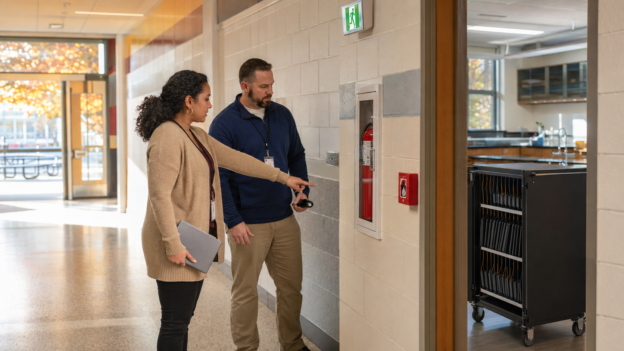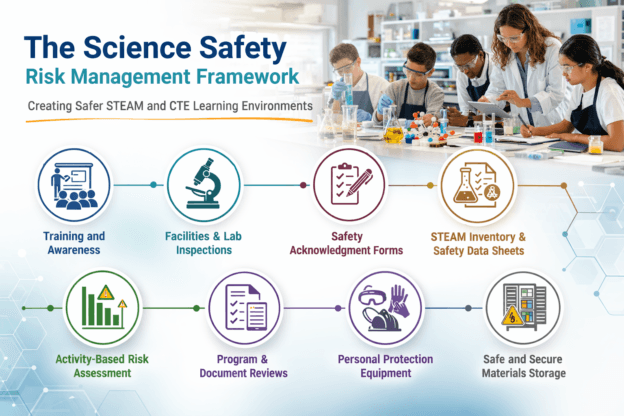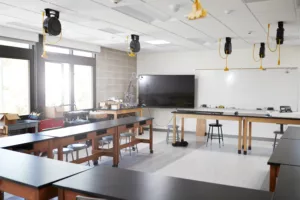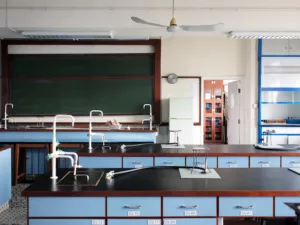
Have you recently conducted a physical safety inspection in your science, STEM, or CTE department at school and properly documented it? It is essential to know that for these disciplines, an ANNUAL SAFETY INSPECTION is a MUST as per OSHA regulations.
Watch this short video first. It is the three-step method before every activity and every demonstration: hazard analysis, risk assessment, safety action; the six practices that make it work; the activities that fail the test before you start; the data; and the audience questions on how often to train, a retiring teacher's cluttered lab, and staff goggles better than the students' goggles.
Read the video transcript
You cannot make science and STEAM learning safe. Accidents can still happen. You can make it safer, and the way you do that, before every activity and every demonstration, is a three-step method: hazard analysis, risk assessment, safety action. The steps are taken in order, because you cannot choose an action until you know the hazard and the risk.
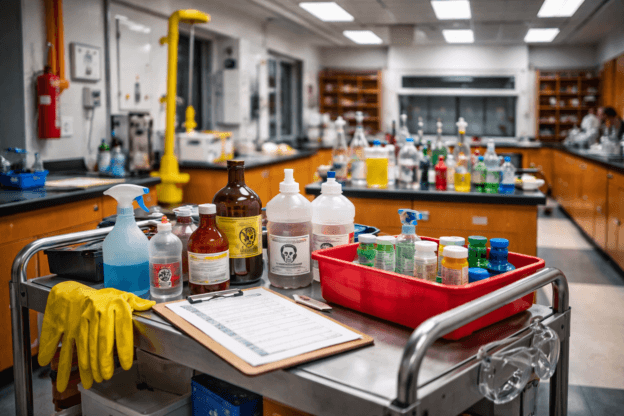
Hazard analysis asks what in this activity can hurt someone. Three kinds of hazard. Physical, from a meter stick, a slinky or a rocket to a power tool. Chemical: acids, bases, flammables and toxins. And biological: microbes, specimens and poisonous plants. The Safety Data Sheet names the chemical hazards. Your experience, your chemical hygiene plan and trusted colleagues name the rest.
Risk assessment asks how likely the harm is and how bad it would be. The Safety Data Sheet's sections on hazards, fire, spills, stability and toxicity tell you.
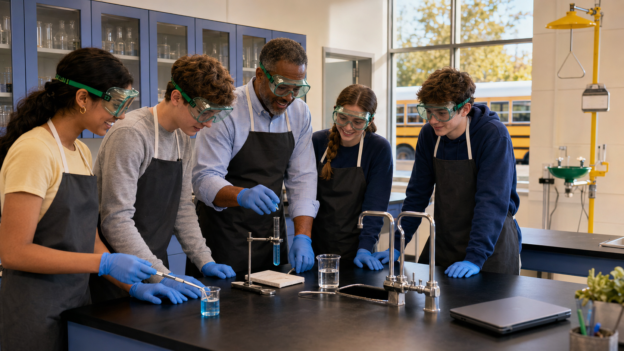
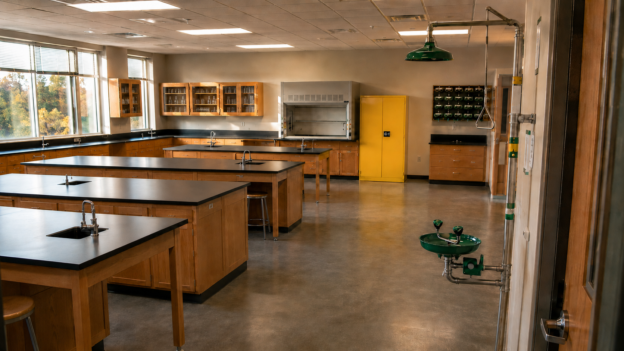
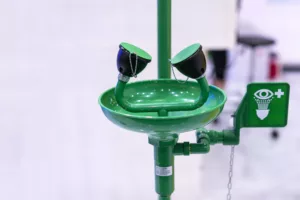
Safety action is the hierarchy from the hazard prevention guide. Engineering controls first: ventilation, hoods, eyewash and shower. Then administrative controls, your protocols. Then protective equipment. And two more words sit above all of them: substitution and elimination. If the three steps still leave a hazard you cannot control, the activity is not done.
Six practices make the method work. Review the Safety Data Sheet; your employer must provide one for every chemical. Review every piece of equipment, apparatus and tool, before the day, not during it. Review the procedure: concentrations, timing, sequence, waste and emergency steps, and never let two classes share a waste container whose contents could react. Test-drive a new activity with a colleague first, the way you would visit a field-trip site before you take students. Substitute a less hazardous chemical where the curriculum allows. And ask whether the educational value outweighs the risk.
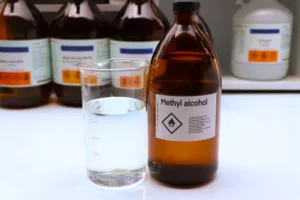
Some things fail that question before you start: aerosol products, acetone solutions, alcohol fuel burners, bacteria cultured from the school's surfaces, body fluids, concentrated acids and bases, formaldehyde and specimens kept in it, mercury, methanol, poisonous plants, solvents, and any chemical you cannot identify. Methanol in particular: its flame cannot be seen, and school after school has sent a student to the burn unit because of it.
The data says why this matters. Eight in ten science and STEM teachers reported an injury in the past year. More than a third have had no formal safety training, and training cuts accidents by about half. Sixty-nine percent do not use a safety acknowledgment form. Fewer than half the schools have goggles that meet the Z87.1 D3 standard.
Three questions came in from the audience. First: how often should members of the science department be safety trained? Minimally once a year, to review the changes in the chemical hygiene plan, and again on a change of assignment: biology last year, a section of chemistry this year, means training on the chemicals. A new hire gets more than the veterans, and everyone is trained on the updated plan.
Second: a teacher is retiring in December and leaving an extremely full, cluttered lab for the new teacher who inherits it. Any suggestions? Tell the chemical hygiene officer and the department supervisor, in writing, about the shared liability if that new teacher or a student is hurt in there. The room is checked for chemical and biological hazards and cleaned out before the new teacher walks in. If the building administration shrugs, go through the union to the superintendent. A room like that is a long-term problem no inspection should have passed, and plan B is the union inviting OSHA in.
Third: our staff were given better goggles than the students use. Is that acceptable? Better is fine as long as both meet the ANSI Z87.1 D3 standard. Fancier is not the test. The standard is.
If you see a colleague running a dangerous activity, stop it, politely and away from the students. If you inherit a cabinet of unlabeled, oozing or crystallized bottles, close the door and call for help. Do not move them. And if you did the three steps and a student was still hurt, you can still be sued, but your lesson plans, your acknowledgment forms and your assessment are your defense. Safer, before every activity.
Science Safety presents hazard analysis, risk assessment and safety action: the three steps in order; physical, chemical and biological hazards; the Safety Data Sheet in the risk assessment; the hierarchy of engineering controls, administrative controls, protective equipment, substitution and elimination; six practices from reviewing the sheet to weighing value against risk; the activities that fail the question; the national data; what to do about a colleague, an inherited cabinet and a lawsuit; and the audience questions on annual training, a cluttered lab left to a new teacher, and goggle standards.
Don’t miss out on valuable information! Enhance your knowledge by checking out our catalog of webinars or visiting the Science Safety YouTube channel.