There are many often overlooked aspects of responsible chemical management and safety programs ‘better professional safety practices’ at the end of the school year for a multitude of reasons. Science Safety wants to ensure that your Science, STEM, and CTE departments are aware of the summer shutdown procedures and protocols that will facilitate a safer department re-opening in August or September.
Watch this short video first. It is how a science, STEAM or CTE department closes for the summer: housekeeping, chemical hygiene, plants and animals, engineering controls and the papers, with five photographs of real rooms and students and the faults called out, and the audience questions on an old storeroom with crystals at the caps, occupancy load, liability after a hazard analysis, pre-made kits, and a principal with no money for goggles.
Read the video transcript
The last day of the school year is the first day of next year's safety. Before a science, STEAM or CTE department leaves for the summer, three kinds of hazard are put to bed, chemical, biological and physical, and one set of papers goes to the administration.
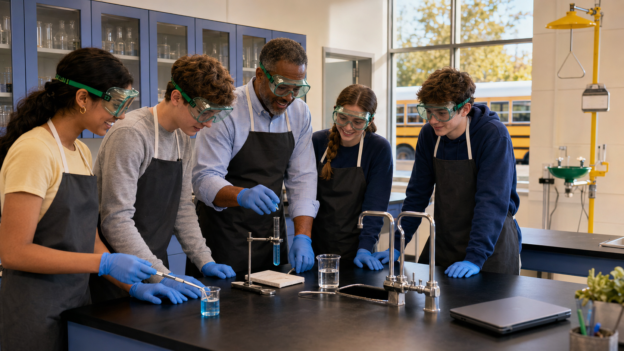
Take a look at this image, and nothing here is staged. She has her gloves on, working with a chemical in a beaker. She has her indirectly vented chemical splash goggles on. But look at the hair. It is hanging loose, it can reach the chemical, and she is beside a burner: it can go up like a torch. Hair is always pulled back.
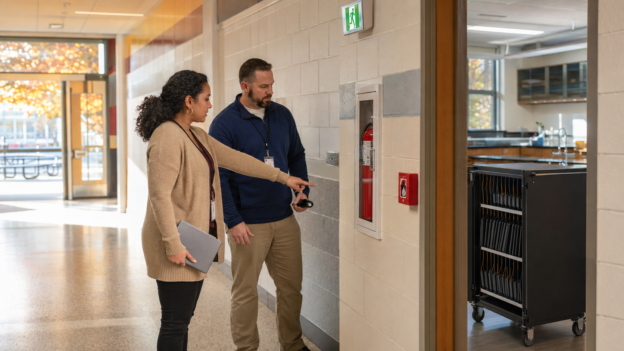
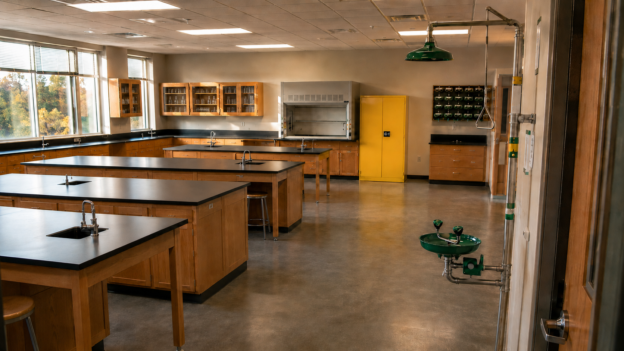
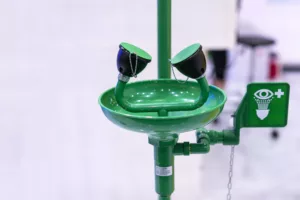
Housekeeping first. Neat, tidy and organized is a daily habit, and the summer is when it is tested, because custodians will be in these rooms without you. Nothing on the floor, nothing in front of the eyewash, the shower, the extinguisher or the hood. Glassware washed and back in its cabinet, broken glass in an approved box, the dishwasher run and emptied, the refrigerator cleared. Protective equipment is cleaned in two steps: soap and water first, for the chemical and physical residue, then the UV sanitizer for the biological. Anyone cleaning these rooms over the summer has had hazard communication training.
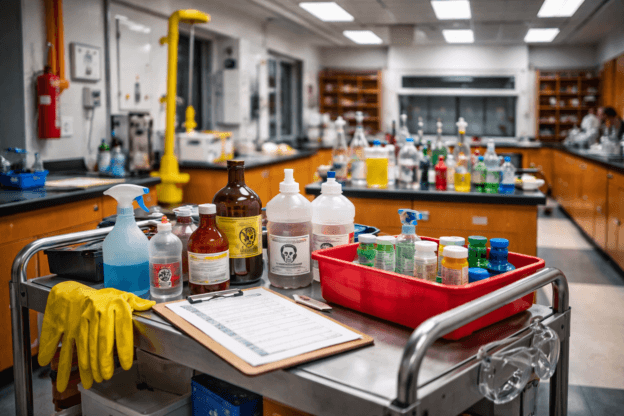
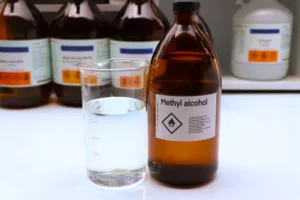
Chemical hygiene. Every chemical goes back to its place in a storage system, and alphabetical is not a system. Broken caps and missing labels are fixed before you leave, because a firefighter may be the next person to read them. Acids and bases separate, nitric acid on its own, flammables in the flammable cabinet, a flammable gas cylinder in a cabinet of its own, and a kit that has been opened is separated into the right cabinets. Lock the cabinets. Lock the storeroom. The inventory is kept all year, not rebuilt in June. Order fresh stock for delivery when teachers are back, not before. Waste sits in a tray on its own shelf with its Safety Data Sheets, labeled clearly, a question mark where you honestly do not know, until a licensed company removes it.
And this storage area, which I hope is not yours. Labels you cannot read. Residue and particulate sitting everywhere. Chemicals oozing out of their containers. Not all chemicals get along, and when they get together, boom.
Plants and animals need care for the whole closure: water, food, light, and a room that is not shut down to save money. Give the care instructions to whoever takes them in writing.
Engineering controls. Flush the eyewash and shower weekly, all year. The fume hood is inspected by a certified technician every year, and it leaves for the summer empty, valves closed, sash set. Extinguishers are recharged and tagged. A cup of water in every drain stops sewer gas, and check under every sink for leaks. Signs for the eyewash, the shower and the extinguisher sit high enough to be seen from anywhere in the room. Doors, cabinets and master shutoffs are locked, because you do not know who will be let into your lab in July.
Then the papers. The inventory and the Safety Data Sheets go to the administration, the fire marshal, the nurse and the chemical hygiene officer. Student safety acknowledgment forms are kept at least to the statute of limitations. The inspection report and the work orders go in writing, with a copy kept. The ventilation stays on in the storeroom. And the training for new teachers and new assignments is scheduled for the week before school, grade and subject specific.
Three more images from a safety perspective. The excited young student at a fizzing reaction: safety glasses, useless for a liquid hazard, open over the top and open at the sides. Indirectly vented chemical splash goggles, nitrile or vinyl gloves, and an apron. Then the older students who should know better, in nice lab coats and safety glasses, with no gloves: splash goggles are the legal standard for a liquid hazard. And the student in the striped sweater: goggles on, which is right, but no gloves, no apron, and her hair hanging down. If you are an administrator, you go in, you observe, and you make sure the hair is pulled back.
Five questions came in from the audience. First: an old storeroom with labels falling off, bottles oozing, crystals at the caps. What do we do? Gently close the door and do not move anything. The supervisor calls the fire marshal, and the fire department comes in. Crystals can be a peroxide. A biology teacher in Maryland opened an old bottle of picric acid, crystals galore, and the explosion took his arm from the elbow down. If everything is labeled, dated and in order, handle it; if any of this is there, get help.
Second: is there a minimum square footage per student in a lab? Fifty square feet net per occupant, under the fire code. Take the area of the lab, subtract every counter and piece of furniture, divide by fifty. That is the occupancy load, not the class size, and it counts the teacher, the aide, the volunteer and the parent. Legally it is the teacher who is responsible for safety in the lab, not the administrator.
Third: I did a hazard analysis and risk assessment and a student was still injured. Am I responsible? Most certainly. But you have an outstanding defense. The signed safety acknowledgment form can be subpoenaed. The lesson plan shows the safety review before the activity. The hazard analysis and the risk assessment are in your corner. The court knows a lab cannot be made safe, only safer, and you made it safer.
Fourth: I buy pre-made kits. Are their instructions safety approved? It depends what the supplier means by approved. Some reputable companies have somebody knowledgeable checking; many do not, especially from abroad. If the kit involves chemicals, your chemical hygiene officer looks it over, or an experienced colleague. Do not assume the box is right. Redo your own hazard analysis and risk assessment and take the action.
Fifth: we need new goggles and the principal says there is no money. The employer is required by the personal protective equipment standard to provide your eye protection, and most states have a goggle statute for the students. Put it in writing, tell your union, and tell the administrator that labs stop until the required equipment arrives. Two hundred and forty dollars for a class set against a million-dollar lawsuit. And if the eyewash does not work, no chemical lab either.
If September brings thirty-three students to a room built for twenty-five, remember the occupancy load: fifty square feet net per occupant, teacher included. Over it, no hands-on work, and say so in writing. Close safer, open safer.
Science Safety presents school year-end closing recommendations: housekeeping for the custodians, every chemical back in a storage system with the inventory kept all year, waste in its tray until a licensed company removes it, care for plants and animals, eyewash, shower, fume hood, extinguishers, drains and shutoffs, the papers to the administration, the fire marshal and the nurse; five photographs with the faults called out (loose hair at a burner, an oozing storeroom, safety glasses at a fizzing reaction, lab coats without gloves, a student without apron or gloves); and the audience questions on crystals at the caps and peroxides, occupancy load, liability after a hazard analysis, pre-made kits, and the goggle budget.
Don’t miss out on valuable information! Enhance your knowledge by checking out our catalog of webinars or visiting the Science Safety YouTube channel.