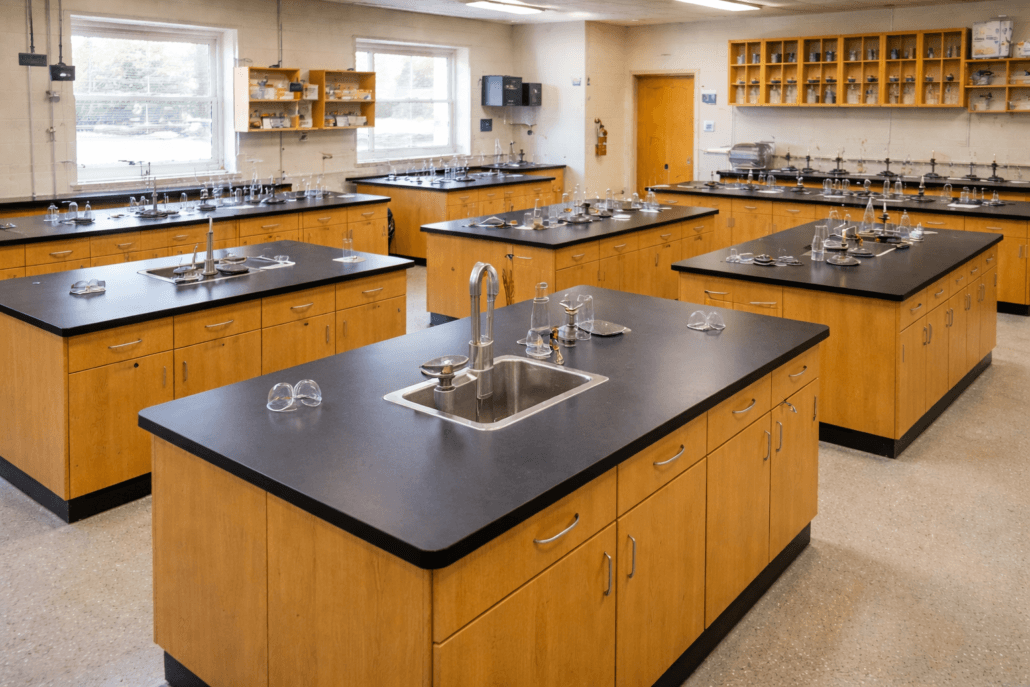
Occupancy load overcrowding in a science lab is not just a scheduling problem. It is a safety problem.
Unlike traditional classrooms, science labs contain gas outlets, chemicals, glassware, ignition sources, electrical equipment, and specialized safety stations. These spaces are designed with specific square-footage allowances per occupant to maintain safe movement, supervision, and emergency response.
When a lab exceeds its occupancy load:
Aisles narrow
Exits become obstructed
Access to eyewash stations and safety showers is reduced
Supervision becomes more difficult
Evacuation time increases
These are measurable risk factors. They are also preventable.
What Occupancy Load Actually Means
Occupancy load is the maximum number of people permitted in a space based on building and fire code standards. It is calculated using the room’s area and an occupant load factor assigned to the space type.
In simple terms:
Room Area ÷ Occupant Load Factor = Maximum Occupancy
The important detail is this: science laboratories are not calculated the same way as general classrooms.
Typical occupant load factors include:
20 square feet per person for standard classrooms
50 square feet per person for science laboratories
60 square feet per person for combination lab/classroom spaces
The difference is significant.
For example:
A 1,200 sq. ft. classroom at 20 sq. ft. per person = 60 occupants
The same 1,200 sq. ft. space as a lab at 50 sq. ft. per person = 24 occupants
That is less than half the number.
When schools use classroom assumptions for laboratory scheduling, occupancy load overcrowding becomes almost inevitable.
Why Labs Require More Space Per Student
Science labs require additional clearance for several reasons:
1. Fixed Casework and Equipment
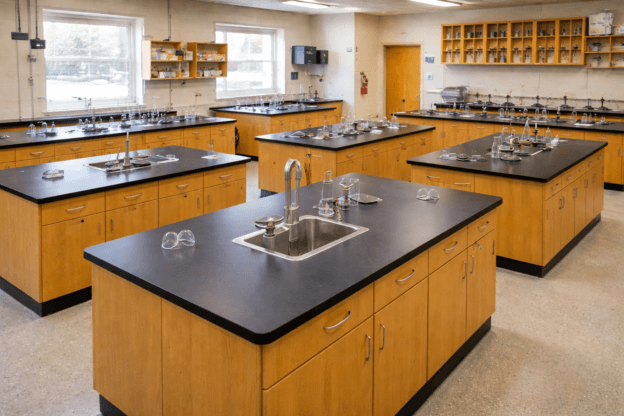
Lab benches, sinks, gas valves, and storage cabinets reduce usable open floor space.
2. Chemical Handling
Students need room to work safely without crowding adjacent experiments.
3. Emergency Access
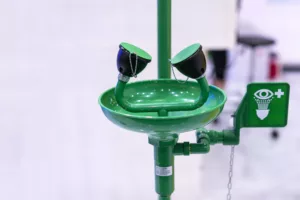
Eyewash stations and safety showers must be accessible within seconds. Overcrowding slows response time.
4. Supervision
Teachers must be able to circulate freely between stations to monitor safety practices.
These factors are built into the higher occupant load factor for laboratory spaces.
The Hidden Risks of Overcrowding
Occupancy load overcrowding does not always look dramatic. Often, it shows up in subtle ways.
You may notice:
Backpacks stored in aisles
Students sharing lab stations designed for one
Stools partially blocking exits
Limited teacher movement between benches
Students waiting for access to sinks or gas outlets
Each of these increases risk.
During an emergency evacuation, even a small obstruction can delay the flow of exits. In a chemical exposure situation, delayed access to safety equipment can increase injury severity.
Beyond physical safety, there are compliance implications. Exceeding established occupancy limits can conflict with fire code requirements. If an incident occurs, documenting the calculated occupancy is critical.
Using the Free Occupancy Load Calculator Tool
To remove guesswork, Science Safety provides a Free Occupancy Load Calculator Tool specifically designed for school environments.
The calculator allows you to:
Enter the room’s length and width (or total square footage)
Select the correct occupant load factor
Classroom (20 sq. ft. per person)
Science lab (50 sq. ft. per person)
Combination lab/classroom (60 sq. ft. per person)
Instantly calculate the maximum allowable occupancy
This tool aligns with recognized fire safety guidelines and provides a defensible number that can be documented and shared with administration.
Instead of estimating or relying on outdated capacity labels, schools can calculate and verify limits using consistent standards.
The calculator is available here:
https://sciencesafety.com/free-occupancy-load-calculator-tool/
Why Documentation Matters
One of the most important benefits of calculating occupancy load is the documentation it provides.
When enrollment pressures increase, teachers and department heads may be asked to “make room” for additional students. Without documented calculations, it becomes difficult to justify resistance.
With a clear occupancy calculation:
The discussion shifts from preference to compliance
Safety concerns are supported by measurable data
Decisions are framed around risk reduction
This changes the tone of the conversation.
It becomes less about limiting access and more about maintaining safe instructional conditions.
Communicating Occupancy Concerns Professionally
The Science Safety occupancy load page also provides a professional letter template that can be adapted for principals or managers when occupancy limits are exceeded.
Rather than confronting leadership informally, the template supports:
Clear explanation of the calculated occupancy
Identification of current enrollment numbers
Professional, non-accusatory language
A documented request for review
The purpose of the letter is not to assign blame. It is to formally document that the occupancy load has been calculated and that current conditions may exceed safe limits.
In safety management, documentation protects everyone involved.
Common Causes of Occupancy Load Overcrowding
Overcrowding usually results from systemic pressures, not intentional neglect.
Common factors include:
Increased enrollment
Staffing shortages
Budget limitations
Scheduling constraints
Assumptions that labs function like lecture classrooms
Understanding the cause helps frame solutions. In some cases, minor scheduling adjustments can resolve the issue. In others, additional lab sections or revised room assignments may be required.
What should not happen is the silent acceptance of unsafe conditions.
Best Practices for Schools
To prevent occupancy load overcrowding in labs:
Calculate occupancy before scheduling begins.
Post the maximum occupancy clearly inside the room.
Train department heads on occupant load factors.
Recalculate if room layout changes.
Avoid using classroom seating capacity for lab spaces.
Consistency is key. When occupancy calculations are part of standard scheduling practice, overcrowding becomes less likely.
A Practical Example
Consider a 1,050 sq. ft. lab.
Using the correct lab factor of 50 sq. ft. per person:
1,050 ÷ 50 = 21 occupants
That total includes everyone in the room, including the instructor.
If the class roster lists 24 students plus one teacher, the room exceeds safe occupancy by four individuals.
That may not sound significant. But it represents nearly a 20 percent increase over the calculated limit.
In safety planning, that margin matters.
The Bottom Line
Occupancy load overcrowding in school labs is preventable.
The standards already exist. The math is straightforward. The tools are available.
What often goes missing is consistent calculation and documentation.
By using the Free Occupancy Load Calculator Tool from Science Safety and referencing the accompanying professional communication resources, schools can:
Verify compliance
Reduce liability exposure
Improve emergency readiness
Support teachers
Protect students
Science labs are specialized instructional environments. They demand higher safety margins than general classrooms.
Calculating occupancy load is not about limiting access to science education. It is about ensuring that science instruction takes place in a space designed to support it safely.
If you are unsure whether your lab is operating within safe limits, take a few minutes to calculate the number.
Safety starts with knowing your room’s capacity.