How the Science Safety Risk Management Framework helps schools reduce hazards, strengthen compliance, and build safer STEAM and CTE learning environments.
The Science Safety Risk Management Framework (SSRMF) provides schools and districts with a structured approach to managing hazards, reducing risk, and protecting students and educators working in laboratory, STEAM, and career and technical education environments.
Hands-on learning is central to modern education. Science laboratories, engineering spaces, and CTE workshops allow students to develop practical skills, explore real-world challenges, and engage in inquiry-based learning. However, these environments also pose potential hazards, including chemical, biological, physical, and electrical hazards.
Because of these realities, safety in educational laboratories cannot rely on isolated procedures or occasional inspections. Instead, schools must adopt a comprehensive risk management strategy that integrates policies, training, materials management, and facility oversight.
The Science Safety Risk Management Framework provides that system.
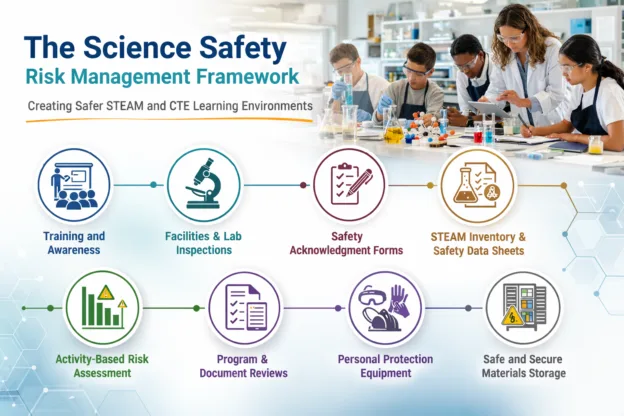
The framework organizes safety practices into interconnected components that help schools prevent accidents, comply with regulatory expectations, and cultivate a culture of safety awareness throughout the district.
Why Risk Management Matters in Science and STEAM Programs
Science and technical programs present hazards not found in most traditional classrooms. Laboratory chemicals, equipment, heating devices, electrical systems, and biological materials all require proper handling and supervision.
Without a coordinated safety program, schools may experience:
preventable injuries
chemical exposure incidents
equipment accidents
regulatory violations
increased legal liability
Risk management provides schools with a proactive approach to identifying hazards before accidents occur. By examining activities, facilities, materials, and training requirements, schools can reduce the likelihood of incidents and improve the overall safety of the learning environment.
The SSRMF emphasizes that safety is not a single action. It is a continuous process involving planning, training, evaluation, and improvement.
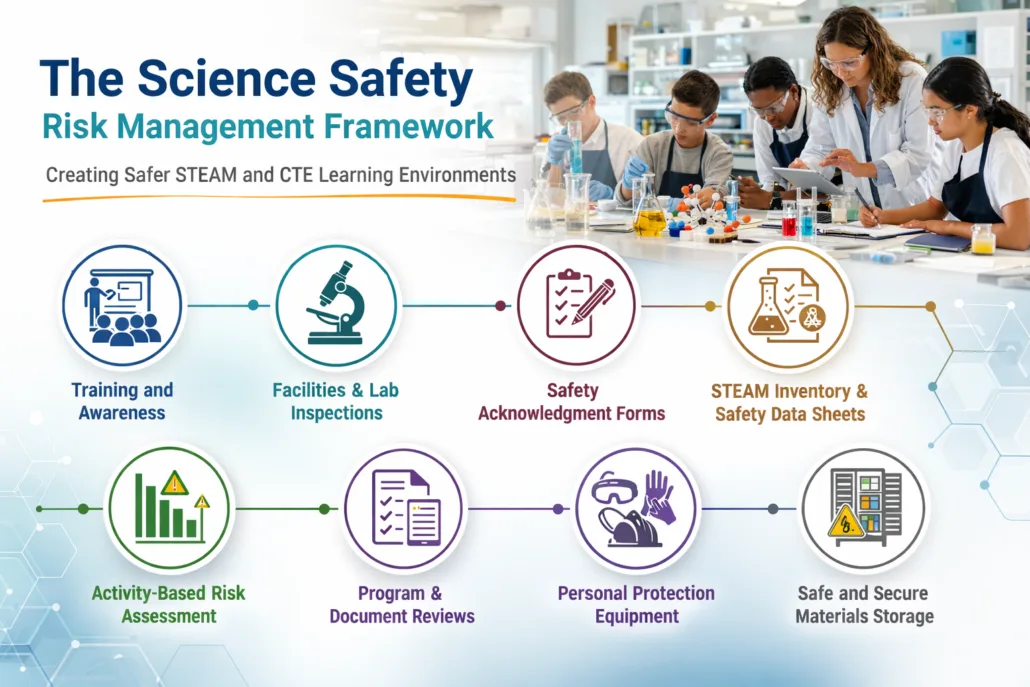
The Core Components of the Science Safety Risk Management Framework
The framework illustrated above outlines the key areas that contribute to an effective risk management strategy. Each component supports the others, and together they create a safer instructional environment.
Training and Awareness
Safety training is the foundation of any risk management program.
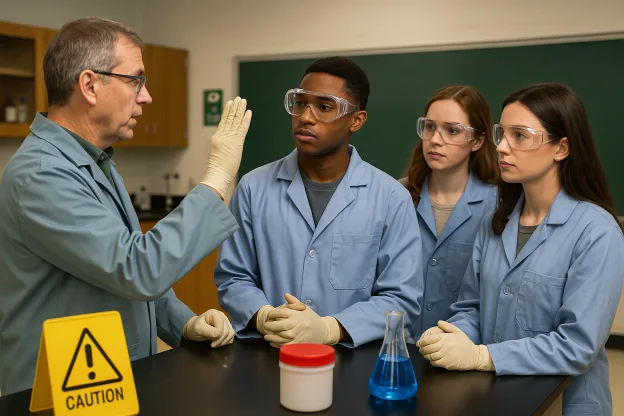
Educators, administrators, and students must understand the hazards associated with laboratory and technical activities before those activities begin. Annual safety training should be conducted for teachers and administrators, particularly when new assignments involve laboratory equipment, chemicals, or specialized facilities.
Students should receive safety instruction appropriate to their age and subject area. This training should address topics such as laboratory behavior, hazard recognition, emergency procedures, and the correct use of personal protective equipment.
Educators also have a legal responsibility under Duty of Care obligations to model safe procedures and demonstrate proper techniques before students perform laboratory activities.
Regular training helps ensure that everyone in the learning environment understands expectations and knows how to respond to potential hazards.
Facilities and Laboratory Inspections
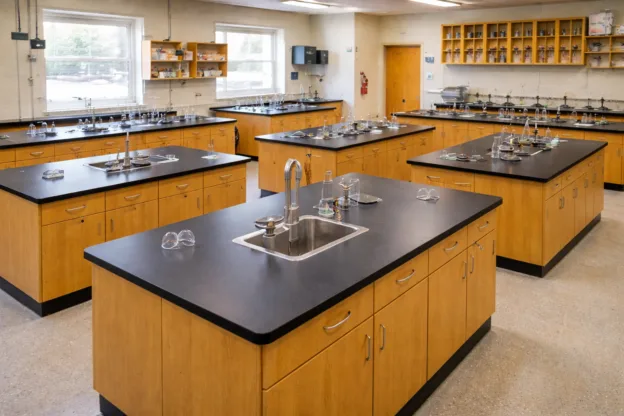
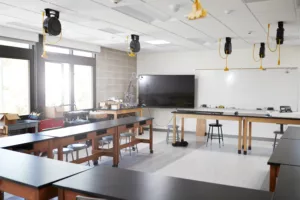
Laboratory and technical facilities must be evaluated regularly to ensure that safety infrastructure is functioning properly.
Annual safety inspections are an important part of regulatory compliance and should involve multiple members of the school safety team. Typically, inspections include the Chemical Hygiene Officer, administrators, and science department representatives.
During these inspections, teams examine areas such as:
laboratory ventilation systems
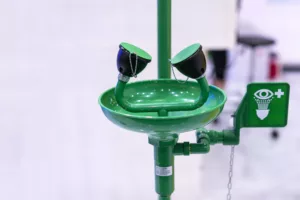
eyewash stations and safety showers
fire extinguishers and fire safety equipment
chemical storage areas
electrical systems and equipment
emergency exit pathways
laboratory housekeeping and organization
Inspections are not simply checklist exercises. Inspectors must understand why specific safety elements are required and how they contribute to hazard reduction.
When deficiencies are discovered, corrective action should be taken promptly to ensure safe operation of the laboratory environment.
Safety Acknowledgment Forms
Student safety acknowledgment forms, often referred to as safety contracts, help reinforce laboratory expectations and responsibilities.
These documents outline the laboratory safety rules and require students—and often parents or guardians—to acknowledge the expectations associated with participating in laboratory activities.
Safety acknowledgment forms serve several important purposes:
reinforcing safety expectations
documenting that safety training occurred
encouraging responsible student behavior
supporting risk management documentation
Schools typically retain these documents for several years, as they may be needed during an incident investigation.
STEAM Inventory and Safety Data Sheets
Accurate chemical and materials inventories are essential for laboratory safety.
Schools must maintain an inventory of chemicals and hazardous materials present in science departments, technical education programs, maintenance areas, and art classrooms. Each chemical must also have an accessible Safety Data Sheet (SDS) that provides detailed information about hazards, safe handling practices, and emergency procedures.
A well-managed inventory system allows schools to:
track hazardous materials
identify incompatible chemicals
plan for proper storage and disposal
respond effectively during emergencies
Maintaining SDS documentation also supports regulatory compliance and helps educators understand the risks associated with the materials they use in instruction.
Activity-Based Risk Assessment
One of the most important elements of the SSRMF is the evaluation of hazards before conducting laboratory activities.
Educators should conduct a hazard analysis and risk assessment when planning demonstrations or experiments. This process examines the materials, equipment, and procedures involved and identifies ways to minimize potential hazards.
A key question in this evaluation is whether the educational value of the activity outweighs the risks involved.
If the risks cannot be adequately controlled, educators should consider modifying the procedure or using alternative instructional methods such as simulations or videos.
By evaluating activities before they occur, schools can prevent many accidents and injuries.
Program and Document Reviews
Safety policies and procedures must be reviewed regularly to ensure they remain accurate and effective.
Important documents include the Chemical Hygiene Plan, laboratory safety manuals, and emergency response procedures. These documents outline the standards and operating procedures that guide safe laboratory practices.
Regular reviews allow schools to:
update procedures based on new regulations
incorporate lessons learned from inspections
address changes in facilities or equipment
strengthen the overall safety program
Maintaining up-to-date safety documentation is a critical part of responsible risk management.
Personal Protective Equipment
Personal protective equipment (PPE) is essential for minimizing exposure to hazards.
In science laboratories and technical education environments, PPE may include:
chemical splash goggles
safety glasses
gloves
laboratory coats or aprons
face shields
protective footwear
The type of PPE required depends on the hazards associated with the activity.
For example, chemical splash goggles that meet recognized safety standards should be used when working with liquids, chemicals, heat, or glassware. Safety glasses may be appropriate for certain dry laboratory activities involving projectiles or tools.
Providing properly fitted and certified PPE—and ensuring that it is used consistently—is a critical step in protecting students and educators.
Safe and Secure Materials Storage
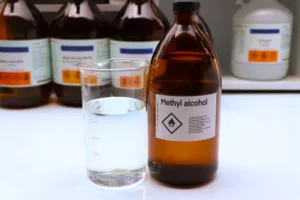
Proper storage of hazardous materials is essential for preventing accidents and controlling access to chemicals.
Chemical storage areas should be equipped with appropriate safety cabinets and ventilation systems, and access should be restricted to authorized personnel. Clear signage should identify restricted areas and indicate potential hazards.
Chemicals must be stored according to compatibility groups, and incompatible substances should be separated to prevent dangerous reactions.
Schools should also minimize the quantity of hazardous materials stored on-site and maintain organized storage areas to reduce the likelihood of spills or accidents.
Secure storage practices help reduce risks associated with both daily laboratory activities and emergency situations.
Building a Culture of Safety
The Science Safety Risk Management Framework demonstrates that effective safety programs require coordination across many areas of a school system.
Training, inspections, documentation, risk assessments, equipment management, and storage practices must work together to create a comprehensive safety strategy.
When implemented effectively, the framework helps schools move beyond reactive responses to accidents and toward a proactive culture of safety awareness.
Through consistent planning, education, and evaluation, schools can provide engaging hands-on learning experiences while protecting the well-being of students, educators, and the broader school community.
The Science Safety Risk Management Framework ultimately serves as a guide for schools seeking to balance innovation in education with the responsibility to maintain safe learning environments.