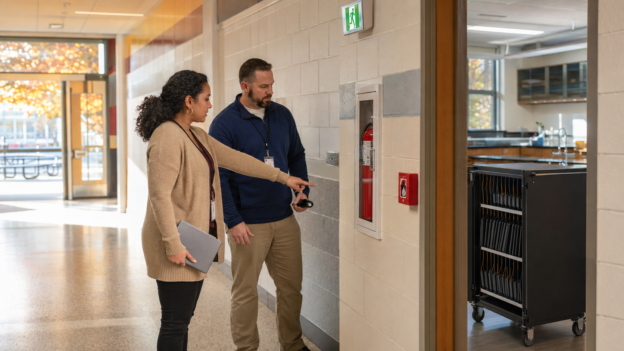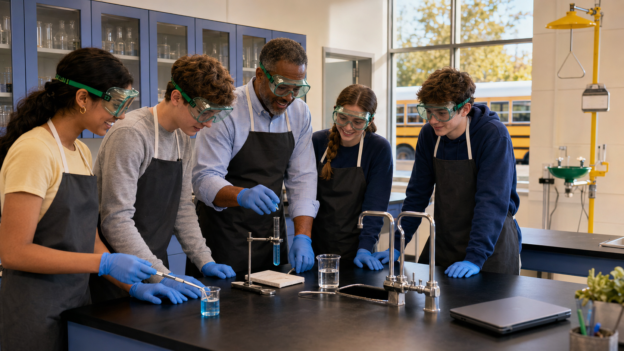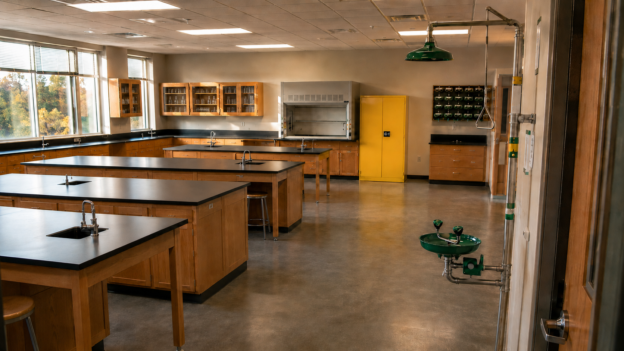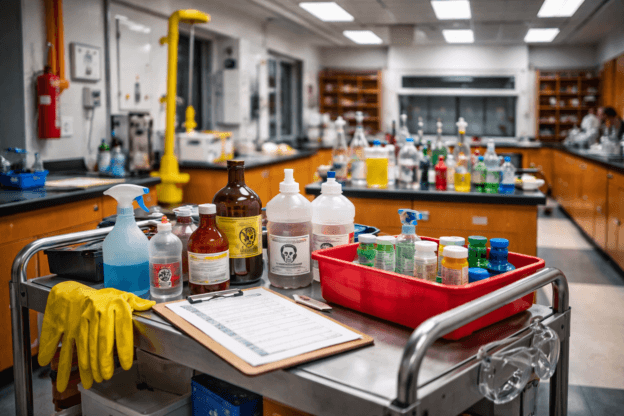
Closing the lab for the summer shutdown is one of the most critical science lab safety responsibilities of the year.
A proper lab shutdown is not cleaning. It is risk management. It is asset protection. It is liability control.
We have walked into labs in August and seen what happens when a shutdown is rushed. Chemical bottles with crystallization around the cap. Refrigerators full of spoiled specimens. Half-labeled waste containers no one wants to claim. Gas valves are left in uncertain positions.
Most of those problems started small in May.
For lab managers, CHOs, principals, administrators, and science department chairs, summer lab closeout is where your safety culture becomes visible. What you do now determines what you face in the fall.
Below is a structured, field-tested shutdown plan designed for K–12 science labs and prep areas.
1. Start With a Written Shutdown Plan
Before touching a cabinet, establish structure.
Assign responsibility by category: chemicals, biology materials, equipment, utilities, waste, and documentation.
Set a defined timeline.
Determine who retains summer access.
Open a shutdown log.
Document everything. Date, task, responsible party, corrective action. Take photos when appropriate.
If something goes wrong in July, documentation protects your team and your district.
Your Chemical Hygiene Plan should align with your shutdown procedures. If practice and policy do not match, this is the time to correct it.
2. Biology Materials and Preserved Specimens
Biology areas create predictable summer risks.
Living Organisms
If organisms remain on site:
Assign a documented caretaker.
Confirm environmental controls.
Remove perishable materials.
Establish emergency contact procedures.
If organisms will not remain:
Follow district-approved disposal procedures.
Document actions taken.
Every year, we see situations where care was “assumed.” Assumptions create problems.
Preserved Specimens
Store at room temperature.
Keep out of direct sunlight.
Maintain sealed containers.
Do not refrigerate or freeze unless the manufacturer’s guidance states otherwise.
If fixatives are present, confirm ventilation and containment meet district guidance.
Summer heat accelerates evaporation and container degradation. Inspect seals now, not in August.
3. Closing the Lab: Equipment, Surfaces, and Physical Space
Idle labs degrade faster than active ones.
Decontamination
For reusable biological equipment:
Autoclave when appropriate.
Use approved disinfectant solutions.
Wash, dry, and store correctly.
Microbiological waste must be properly decontaminated before disposal, in accordance with district procedures.
Cleaning and Inspection
Disinfect all work surfaces.
Empty, defrost, and clean refrigerators and freezers.
Inspect microscopes, balances, hot plates, probes, and power supplies.
Label damaged equipment and remove it from service.
Create a single repair staging area. Broken equipment scattered throughout the lab tends to be forgotten.
Glassware and Sharps
Discard chipped or cracked glass properly.
Confirm sharps containers are not overfilled.
Arrange removal if needed.
First-week injuries often stem from a rushed spring cleanup.
4. Chemical Inventory: The Core of Closing the Lab
Chemical management is the highest-risk area of the summer shutdown.
Conduct a Physical Inventory
Do not visually scan shelves. Handle each container.
Confirm:
Full chemical name
Concentration
Date received or prepared
Legible labeling
Appropriate hazard identification
Remove unknowns immediately.
Unknown chemicals are not minor housekeeping issues. They are liability exposures.
Evaluate Chemical Condition
Look for:
Crystallization around caps
Discoloration
Phase separation
Deteriorating containers
Shelf corrosion
We have seen ether bottles with visible crystal formation around the cap after sitting untouched for years. That is not a paperwork issue. That is an emergency response situation waiting to happen.
Peroxide-forming chemicals, aging solvents, and unstable compounds deserve particular scrutiny. Summer heat accelerates degradation.
If a chemical is expired, degraded, or no longer used in the curriculum, schedule proper disposal. Reducing legacy inventory reduces risk.
Segregate by Compatibility
Store chemicals by hazard class, not alphabetically.
Confirm:
Flammables are in approved cabinets.
Acids and bases are properly separated.
Oxidizers are isolated.
Secondary containment is used where required.
Storage drift happens during the school year. Summer is the reset point.
Hazardous Waste
Label all waste containers clearly.
Verify compatibility and secure lids.
Schedule pickup if needed.
Do not leave partially labeled containers for “later.”
Waste left over from summer rarely improves with age.
5. Closing the Lab: Utilities and Engineering Controls
Facilities and insurers pay attention to this section.
Shut off gas at the main and student stations.
Confirm water valves are not dripping.
Verify fume hood sash position per district policy.
Unplug electrical equipment where appropriate.
A slow leak in May can become significant property damage by August.
We recommend a signed utilities checklist.
6. Safety Equipment and Emergency Systems
Shutdown is not complete until emergency readiness is verified.
Ensure eyewash access is unobstructed.
Verify fire extinguisher inspection status.
Restock spill kits.
Inspect goggles and PPE for damage.
Dispose of PPE that cannot be safely sanitized.
Also, confirm that Safety Data Sheets (SDS) access systems remain functional and accessible to staff.
Fall should begin with readiness, not last-minute corrections.
7. Closing the Lab: Security and Documentation
Security protects safety and reduces liability.
Lock chemical storage and prep areas.
Confirm controlled access.
Secure regulated materials per district policy.
Store updated inventory documentation in a secure shared location.
Export a final chemical inventory file before leaving for the summer.
Documentation demonstrates due diligence. In the event of an inspection, incident, or insurance review, documented processes matter.
8. Prepare for Fall Before You Leave
Before locking the door:
Create a reorder list based on verified inventory.
Identify chemicals to eliminate or replace with safer alternatives.
Note training gaps observed during the year.
Schedule fall safety refreshers.
Effective programs treat shutdown as the first step of next year’s safety plan.
Closing the Lab Is Prevention
Closing up the lab for the summer is one of the most important science lab safety processes you complete all year.
When done correctly, it:
Reduces chemical risk
Protects equipment investments
Prevents facility damage
Strengthens safety culture
Reduces district liability exposure
Strong shutdown procedures send a clear message: safety is not seasonal.
We hope these ideas and information are helpful to you and your team as you plan your summer lab shutdown.
Important: This article provides general guidance on science lab safety. It does not replace district policies, regulatory requirements, or professional legal advice. Always follow your Chemical Hygiene Plan, applicable federal, state, and local regulations, and your school’s established procedures. Proper documentation and adherence to recognized safety standards are essential to reducing risk and protecting your organization.