Duty of care in schools and workplaces is often tested by ordinary conditions that become easy to ignore.
A delivery arrives, and several boxes are placed near an exit. They are supposed to remain there for only a few minutes. People can still get around them, so the person who notices decides to deal with the problem later.
The boxes remain. By afternoon, they have become part of the surroundings.
This is how many hazards develop. A temporary condition is tolerated, a damaged item stays in service, or a familiar shortcut becomes routine. Each decision seems small until someone is injured or an emergency exposes the weakness.
Duty of care asks a practical question: Have reasonable steps been taken to protect the people who may be affected?
That question applies to teachers, administrators, supervisors, employees, and the organizations responsible for the buildings, equipment, policies, and systems people rely on every day.
What Duty of Care Means
Duty of care generally refers to the responsibility to act with reasonable caution and protect others from risks that can be anticipated. What that requires depends on the setting, the people involved, the nature of the activity, and the potential severity of harm.
A kindergarten teacher supervising recess, a high school chemistry teacher preparing a laboratory investigation, a facilities employee using a ladder, and a manufacturing supervisor overseeing powered equipment do not face the same hazards. They do share a responsibility to recognize conditions that could cause harm and respond appropriately.
Specific legal obligations vary by state, industry, employer, role, and jurisdiction. School policies, building and fire codes, occupational safety standards, and accepted professional practices may all shape what is expected.
The underlying decisions are remarkably consistent:
- Identify hazards before people are exposed.
- Provide appropriate instruction or training.
- Supervise or monitor the activity at a level that matches the risk.
- Maintain facilities, equipment, and protective systems.
- Report unsafe conditions and follow them through correction.
- Prepare for emergencies and learn from incidents and near misses.
A strong duty-of-care system depends on people at every level understanding what they control, what they must report, and when an activity or work process needs to stop.
Instruction and Training Must Match the Task
People cannot follow precautions they have never been taught.
In a classroom, that may mean explaining safe movement, use of materials, emergency procedures, or rules for a hands-on activity. In a workplace, it may involve chemicals, equipment operation, lifting, machine guarding, personal protective equipment, or emergency response.
General directions such as “be careful” or “use common sense” provide very little protection. Effective instruction identifies the hazard, explains the correct procedure, describes what should not occur, and tells people what to do if something goes wrong.
Training should reflect the person receiving it. A young student needs different language and supervision than a high school student. A new employee, temporary worker, contractor, or person assigned to unfamiliar equipment may need more instruction than an experienced employee performing a routine task.
Demonstration matters. When a procedure involves equipment, tools, chemicals, heat, electricity, lifting, or another meaningful hazard, people should see the correct method before being expected to perform it. The adults or supervisors providing the instruction must model the same practices they require from others.
Written procedures support training but cannot replace understanding. A signature confirms that a document was received; it does not prove that the person can recognize the hazard or perform the task safely. A brief demonstration or competency check reveals more.
Retraining may be needed when equipment changes, a new hazard is introduced, responsibilities shift, or an incident exposes a gap.
Supervision and Monitoring Must Be Active
The level of care required changes with the risk and the experience of the people involved.
Teachers need to observe students and intervene when behavior becomes unsafe. Supervisors need to know how work is actually performed—not only what the written procedure says. Administrators need to pay attention to conditions throughout the buildings and grounds they oversee.
Presence alone is not supervision. A teacher grading during a hands-on activity or a supervisor remaining in an office while an inexperienced employee uses unfamiliar equipment may be unable to recognize a developing problem.
The amount of oversight should increase when:
- Participants are young, new, inexperienced, or require additional support.
- The task involves chemicals, heat, electricity, machinery, vehicles, heights, biological materials, or sharp tools.
- Several activities are occurring at the same time.
- The space contains blind spots, crowding, noise, or other barriers to communication.
- A procedure has changed or is being performed for the first time.
Rules must be enforced consistently. When one person is allowed to bypass a guard, ignore required protective equipment, block an exit, or continue horseplay after a warning, the written policy loses authority for everyone else.
Active supervision includes knowing when to stop. A spill, damaged cord, missing guard, unexpected reaction, blocked exit, or sudden change in a person’s condition is a reason to pause. A deadline, production target, or lesson plan does not make the hazard smaller.
Maintenance Is Part of Duty of Care
A safe procedure still depends on a safe environment.
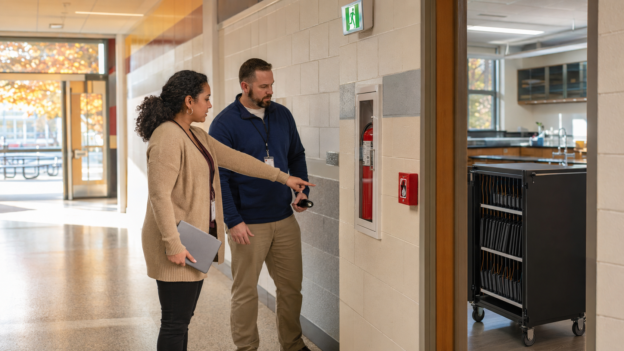
Chairs, shelving, playground equipment, electrical cords, laboratory glassware, ladders, tools, vehicles, ventilation, alarms, machine guards, and emergency equipment all require inspection and maintenance. When a defect is found, the item should be removed from service or the affected area restricted until the problem is corrected.
Employees are not expected to repair systems they are not trained or authorized to service. They are expected to recognize and report unsafe conditions, follow the organization’s reporting process, and avoid using equipment that cannot be operated safely.
Reports should identify the location, condition, date, possible consequences, and correction needed. Keep the report and follow up.
A submitted work order does not control the hazard. The loose handrail is still loose. The leaking container is still leaking. The fire door remains blocked. Until the condition is corrected, the organization needs an interim response that protects people from exposure.
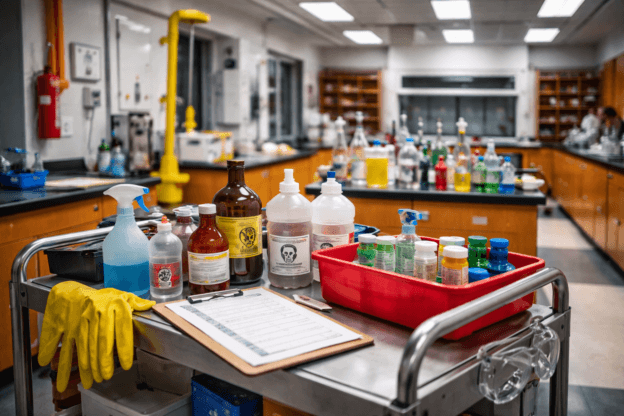
Maintenance also includes less visible systems: chemical inventories, Safety Data Sheets, communication systems, inspection records, first-aid supplies, emergency contacts, and current procedures.
Duty of Care in the Regular Classroom
Duty of care is not limited to science teachers or traditionally high-risk courses. Every teacher makes decisions that affect student safety.
A regular classroom can contain unstable furniture, overloaded outlets, damaged chargers, blocked walkways, unsecured shelving, food allergens, sharp tools, and students with medical or accessibility needs. Arrival, dismissal, recess, assemblies, and movement between spaces can introduce additional risk.
Teachers need accurate information about emergency procedures and student needs, consistent with privacy requirements. They should know how to request assistance, account for students during an evacuation, and respond when a student becomes ill or injured.
Classroom activities also deserve review. Art projects may involve cutting tools, adhesives, or aerosols. Cooking can introduce heat, appliances, food allergies, and sanitation concerns. A physical demonstration may require more room than the classroom provides.
The question is not whether the activity appears harmless. It is whether the teacher has considered the students, materials, space, and foreseeable ways the activity could go wrong.
Substitute teachers and paraprofessionals must be included. They need usable information about supervision, emergency procedures, student needs, and any activity they are expected to manage. If a substitute is not prepared to oversee a particular activity, the activity should be changed.
Higher-Risk Science, Laboratory, and CTE Environments
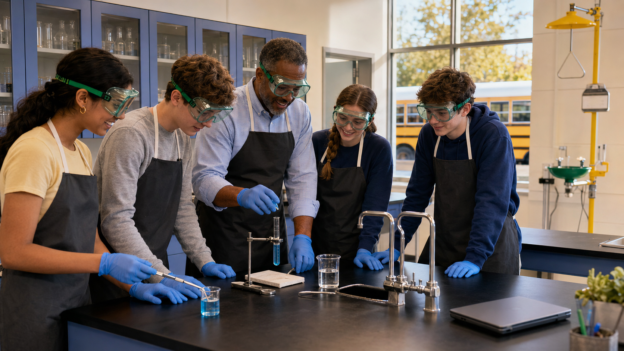
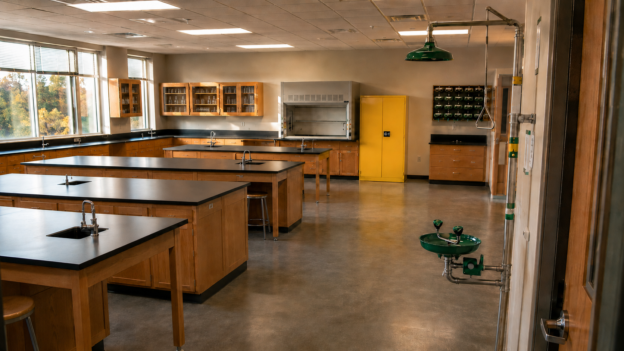
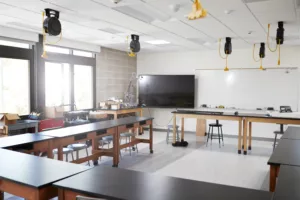
Science laboratories and CTE spaces bring together hazards that may be severe or unfamiliar to students. Chemicals, open flames, biological materials, power tools, electrical systems, sharp instruments, moving equipment, dust, and noise require activity-specific planning.
The National Science Teaching Association identifies three central responsibilities for science educators: instruction, supervision, and maintenance. Those responsibilities also provide a useful framework for CTE and other hands-on programs.
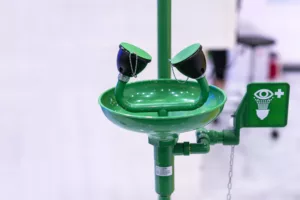
Before an activity begins, the instructor should identify the hazards, assess the risk, select controls, verify that emergency equipment is working, provide specific instructions, and determine whether the room and class size allow effective supervision.
The American Chemical Society’s RAMP framework organizes this process into four steps: recognize hazards, assess risks, minimize risks, and prepare for emergencies.
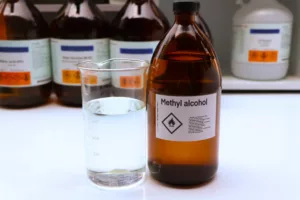
Schools using hazardous chemicals also need an effective Chemical Hygiene Plan where required and as a better professional practice. It should guide chemical purchasing, storage, use, training, emergency response, waste management, and the responsibilities of the Chemical Hygiene Officer. It must be a working document, not a binder opened only during an inspection.
An activity should not continue because it has been performed for years or appears in an older curriculum. Materials change, equipment ages, rooms are renovated, class sizes grow, and safer methods become available. If the risk cannot be controlled with the available facility, equipment, training, time, and supervision, the activity needs to be modified or postponed.
Duty of Care in Industry and the Workplace
In industry, duty of care is reflected in an employer’s responsibility to provide safe working conditions, follow applicable standards, train employees, maintain equipment, and address recognized hazards.
Section 5 of the Occupational Safety and Health Act includes the federal General Duty Clause, which requires covered employers to provide a workplace free from recognized hazards that are causing or are likely to cause death or serious physical harm. Specific OSHA standards may also apply based on the industry, task, equipment, or exposure. Coverage differs for some public employees and jurisdictions, so organizations need to understand the requirements that apply to them.
Effective workplace safety depends on knowing how tasks are performed under real conditions. Written procedures may overlook production pressure, staffing shortages, awkward equipment placement, language barriers, fatigue, heat, noise, or common workarounds.
Supervisors should ask workers where processes break down and what makes safe work difficult. Employees often see developing hazards before an inspection or incident report reveals them. They need a credible way to raise those concerns.
Changes deserve particular attention. New equipment, materials, schedules, contractors, staffing patterns, or production methods can introduce hazards that older training and procedures do not address. Review them before the change is placed into service.
Temporary workers and contractors cannot be treated as outside the safety system. Responsibilities for training, communication, protective equipment, supervision, emergency response, and reporting should be clear before the work begins.
Use the Strongest Reasonable Control
Training and personal protective equipment are important, but they depend heavily on human behavior. When possible, the hazard itself should be removed or controlled at its source.
The NIOSH Hierarchy of Controls provides a preferred order for reducing exposure:
- Elimination: Remove the hazard.
- Substitution: Replace it with a safer material, process, or activity.
- Engineering controls: Isolate people from the hazard through barriers, guards, ventilation, or equipment design.
- Administrative controls: Use procedures, scheduling, signage, training, and supervision to reduce exposure.
- Personal protective equipment: Protect the individual with items such as goggles, gloves, hearing protection, or respirators.
This hierarchy applies well beyond industry. A school can eliminate an unnecessarily hazardous demonstration, substitute a less hazardous chemical, install a guard or ventilation system, change a procedure, and provide appropriate protective equipment.
The strongest solution is usually the one that does not depend on every person remembering to make the correct choice every time.
Responsibility Must Be Shared and Defined
Duty of care becomes weak when everyone assumes someone else is handling the problem.
Leaders control budgets, staffing, policies, training, equipment, and maintenance priorities. Supervisors and teachers direct immediate activities and can stop unsafe work. Employees and students must follow instructions, use equipment properly, and report concerns. Facilities, safety personnel, nurses, and emergency responders each hold part of the system.
Those responsibilities should be written, communicated, and understood. People need to know:
- What hazards they are expected to inspect or monitor
- How to report a concern
- Who evaluates the report
- What interim protection is required
- Who has authority to stop an activity or process
- How and when the correction will be verified
Reporting works only when the organization responds. Repeated unresolved concerns teach people that speaking up is pointless. Correcting the problem—and communicating that it was corrected—builds trust.
Near Misses Are Warnings, Not Non-Events
An injury is not required before an organization learns something important.
A student begins the wrong step but is stopped. A tool guard comes loose after shutdown. A box falls when no one is nearby. A chemical container cracks without leaking. A vehicle narrowly misses a pedestrian.
Each event exposes a weakness while there is still time to correct it.
Near-miss reviews should focus on the conditions that allowed the event. Was the procedure unclear? Was the person properly trained? Did the equipment fail? Did workload encourage a shortcut? Had the hazard been reported before?
Document the correction, assign responsibility, establish a completion date, and share the lesson with others who perform similar work. Use the review to prevent recurrence rather than assign blame.
Make Duty of Care Part of Everyday Work
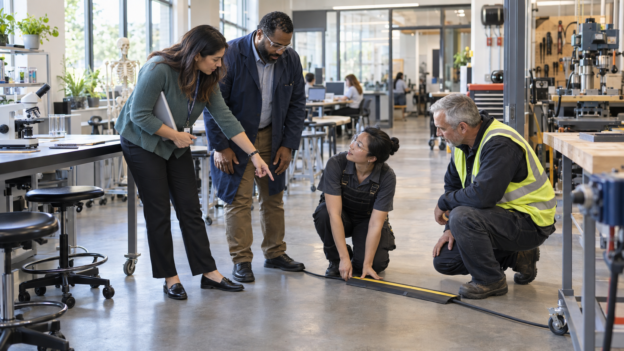
Duty of care is visible in routine decisions: moving the boxes away from the exit, replacing the damaged cord, checking on an inexperienced employee, changing a classroom activity, testing emergency equipment, reporting a near miss, or stopping work until a missing safeguard is restored.
Before the next lesson, event, or work process, ask:
- What could reasonably cause harm?
- Who could be affected?
- Have the people involved received appropriate instruction or training?
- Can the activity be supervised or monitored effectively?
- Are the facility, equipment, and emergency systems ready?
- Is there a stronger way to control the hazard?
- What will happen if conditions change?
No policy can anticipate every situation. Duty of care depends on people recognizing when the conditions in front of them no longer match the plan on paper—and having the authority and support to respond.
The boxes near the exit may seem like a small problem. Moving them is a small decision. Small decisions made early are what keep preventable hazards from becoming emergencies.
Additional Resources
- Science Safety’s FREE Duty of Care module
- OSHA: Recommended Practices for Safety and Health Programs
- OSHA: Duties Under Section 5 of the OSHA Act
- NIOSH: Hierarchy of Controls
- NSTA: Liability of Science Educators for Laboratory Safety
- NSTA: Safety and School Science Instruction
- American Chemical Society: RAMP Framework
- EPA: Toolkit for Safe Chemical Management in K–12 Schools
- OSHA: Hazard Communication Standard