Back-to-school safety begins before the first bell rings. It starts as teachers arrange their classrooms, science departments inspect their laboratories, technology teams prepare student accounts, bus drivers review their routes, and administrators walk the building looking for concerns that may have developed over the summer.
Every September brings new faces, new schedules, and renewed energy. In the rush to welcome students and begin instruction, however, it is easy to assume that everyone remembers the safety procedures reviewed last year.
Experience tells me otherwise.
Returning students need reminders. New students need clear instruction. Teachers may be working in different rooms or using new equipment. Even familiar routines can feel unfamiliar after several months away from school.
This does not mean the year should begin with a long list of warnings. A positive approach to safety is much more effective. When students understand what is expected, know where to find help, and feel comfortable reporting a concern, they are better prepared to participate, experiment, ask questions, and learn.
Safety should never feel like something standing in the way of instruction. It is what allows meaningful instruction to take place.
Take a Fresh Look at the School
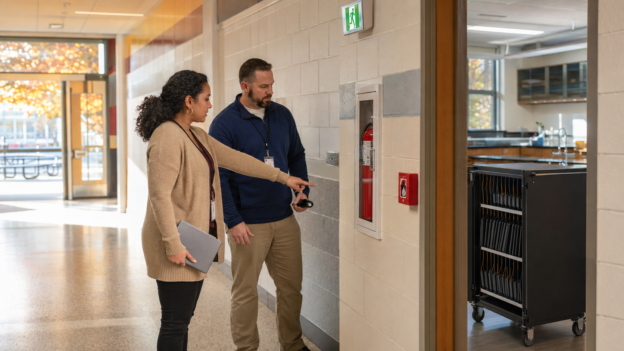
Before students return, staff members should walk through classrooms, laboratories, preparation rooms, hallways, storage areas, and shared spaces with a fresh set of eyes.
Are emergency exits visible and unobstructed? Are evacuation maps current? Are electrical cords damaged or creating trip hazards? Have boxes, furniture, or classroom materials been placed in walkways? Are emergency contact procedures clearly posted? Can staff members quickly request assistance?
Small concerns are often easier to notice after a room has been unoccupied. A leaking ceiling may have left moisture near an outlet. Furniture may have been moved during summer cleaning. Materials may have been returned to the wrong cabinet. An emergency exit may have become a convenient temporary storage area.
These issues may not appear serious on their own, but they can become significant during a busy school day.
The beginning of the year is also a good time to review emergency procedures with staff and students. Drills should be explained calmly and practiced in an age-appropriate way. Students need to know where to go, what to do, and whom to follow. They should also understand that emergency planning must include students with disabilities, multilingual learners, younger children, and anyone who may need additional assistance.
A plan is not complete unless it works for everyone in the building.
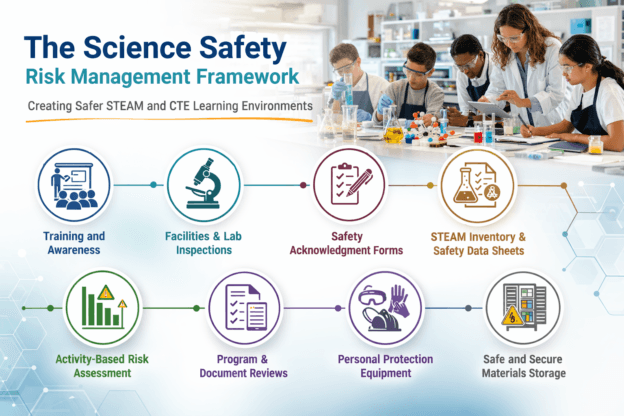
Make the Science Laboratory Ready for Learning
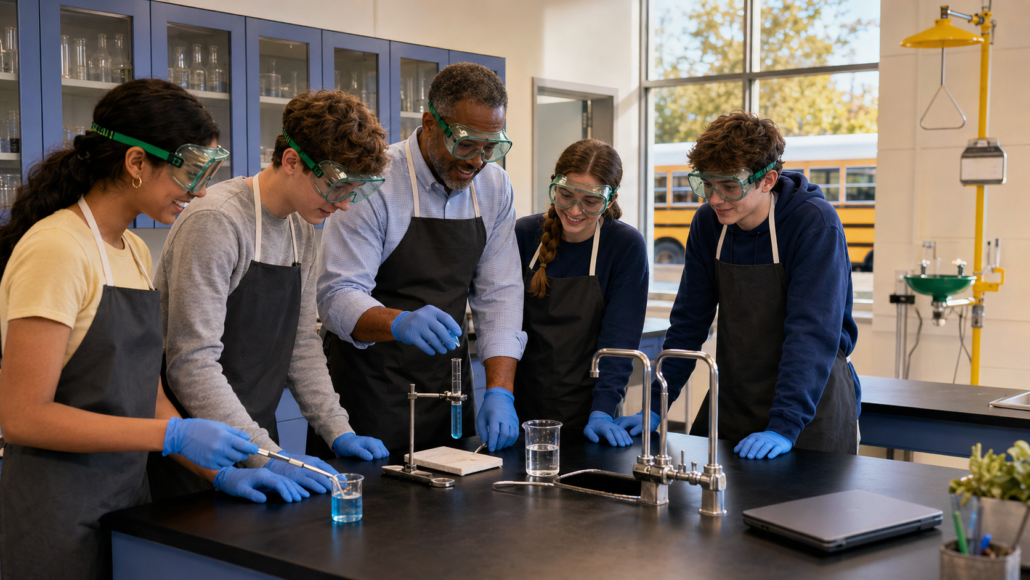
The science laboratory deserves particular attention during the back-to-school transition. Students are naturally excited by experiments, demonstrations, chemicals, glassware, flames, and specialized equipment. That excitement is one of the reasons laboratory learning can be so powerful.
It is also why preparation matters.
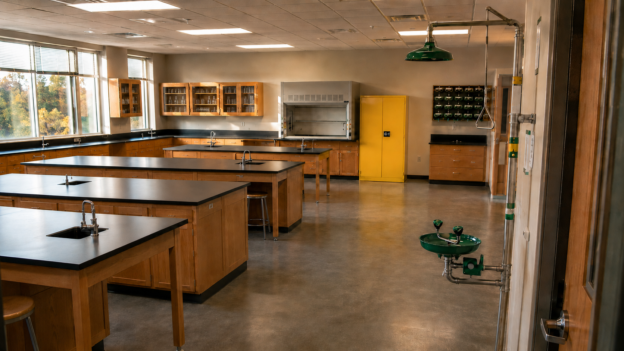
Before laboratory instruction begins, teachers should inspect the room and confirm that essential safety equipment is present, accessible, and functioning properly. Eyewash stations and emergency showers must not be blocked by boxes, stools, carts, or classroom materials. Fire extinguishers, fire blankets, emergency shutoffs, exits, spill-control materials, and first-aid supplies should be easy to locate.
An emergency is not the time to discover that a piece of equipment is difficult to reach or has not been maintained.
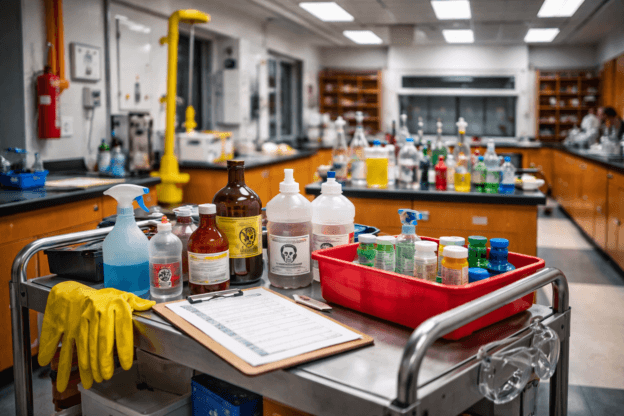
Chemical storage areas also need a careful review. Containers should be properly labeled, securely closed, and stored according to chemical compatibility—not simply alphabetically. Chemicals should not remain on floors, in fume hoods, or in locations where students can access them without authorization. Outdated, deteriorating, leaking, or unneeded chemicals should be addressed through the school’s approved disposal process.
Safety Data Sheets should be current and readily available. Teachers should also confirm that chemical inventories reflect what is actually in the laboratory and preparation room. A spreadsheet or binder is only helpful when it matches the materials on the shelves.
Any school laboratory where hazardous chemicals are used should have a current written Chemical Hygiene Plan and a qualified employee designated as the Chemical Hygiene Officer, consistent with applicable federal or state-plan requirements. The Chemical Hygiene Plan should describe the procedures, equipment, personal protective equipment, training, storage practices, emergency response, and work practices used to protect employees.
Most importantly, it must reflect the school’s actual program. A generic plan downloaded years ago and left in a binder does little to support day-to-day safety. The plan should be reviewed regularly and updated when personnel, chemicals, equipment, facilities, or laboratory procedures change. The OSHA Laboratory Standard provides the foundation for these responsibilities.
Students also need a real introduction to the laboratory. Pointing out the eyewash station and handing students a safety contract is not enough.
Students should learn:
- How to respond to a spill, splash, injury, or broken piece of glass
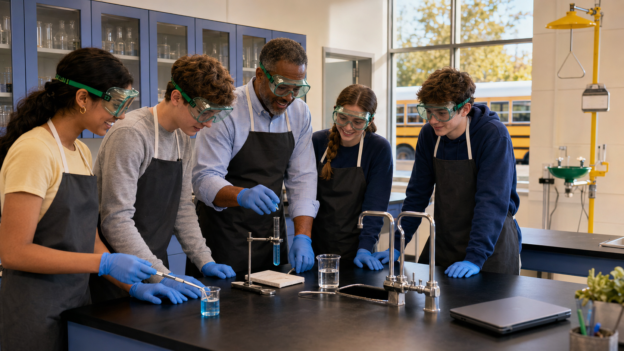
- When and how to use required personal protective equipment
- Why indirect-vent chemical splash goggles are different from ordinary safety glasses
- Why food, beverages, gum, and cosmetics do not belong in the laboratory
- How clothing, loose sleeves, long hair, jewelry, and footwear can affect safety
- Why horseplay, rushing, and unauthorized experiments are unacceptable
- How to clean the work area and dispose of materials properly
- Why every incident, near miss, and unsafe condition must be reported immediately
These expectations should be taught before the first investigation and reinforced throughout the year. The specific hazards of each activity must still be reviewed before students begin their work.
Teachers set the standard through their own behavior. If students are required to wear splash goggles, the teacher should wear them. If aisles must remain clear, the instructor’s materials should not block them. If students are expected to report spills immediately, they need to see adults respond calmly and constructively when something happens.
Students pay close attention to what adults do. Consistent modeling tells them that safety is part of science—not an interruption to it.
Extend Safety Into the Digital Classroom
Today’s school day also takes place online. Students and staff use learning management systems, shared documents, email, educational applications, video platforms, and cloud-based accounts. Protecting those environments is another important part of the back-to-school safety conversation.
The beginning of the year is a natural time to review a few practical habits. Students and employees should use strong, unique passwords or passphrases and enable multifactor authentication when it is available. Passwords and verification codes should never be shared, even with a friend or colleague.
Everyone should be cautious with unexpected links, attachments, password-reset notices, and urgent requests for information. A message may display a familiar name and still be fraudulent. When something feels unusual, the safest response is to pause and verify the request through a trusted method.
Schools should make reporting easy. Students and employees need to know exactly whom to contact when they receive a suspicious message, lose a device, notice unfamiliar account activity, or accidentally share information. Prompt reporting gives the technology team a better opportunity to limit the damage.
Online safety is also about conduct. Respectful communication, protection of personal information, responsible posting, and reporting cyberbullying must be part of regular digital citizenship instruction. The Cybersecurity and Infrastructure Security Agency’s K–12 resources can help schools reinforce these practices.
Remember That the School Day Begins at the Bus Stop
For many students, the bus ride is the first and last part of the school day. Familiarity can make bus routines feel automatic, but students of every age benefit from a September reminder.
Students should arrive at the bus stop with enough time to avoid running toward the bus. They need to wait away from the roadway and avoid pushing, playing, or looking down at a device when the bus is approaching.
After the bus stops, students should wait for the driver’s direction before boarding. Once inside, they must follow the driver’s instructions, keep the aisle clear, and avoid behavior that could become a distraction.
The area immediately surrounding a school bus requires the greatest caution. Students should never walk behind the bus. When crossing in front, they should move far enough ahead to be visible, make eye contact with the driver, and wait for a signal before entering the roadway. If they drop a backpack, phone, book, or other item near the bus, they should tell the driver instead of trying to retrieve it.
Drivers in the community share this responsibility. Yellow flashing lights indicate that a bus is preparing to stop. Red flashing lights and an extended stop arm indicate that children are boarding or leaving the bus. Motorists must follow their state’s school-bus stopping laws and remain alert for students near roadways. The National Highway Traffic Safety Administration provides additional guidance for students, families, and drivers.
Schools should also review arrival and dismissal areas. Buses, parent vehicles, student drivers, pedestrians, and bicycles can quickly create congestion. Clearly marked routes, visible staff supervision, and consistent procedures help everyone move through these areas more safely.
Make It Safe to Speak Up
One of the strongest signs of a positive safety culture is a student who feels comfortable saying, “Something doesn’t look right.”
A student may notice a blocked exit, a wet floor, a loose electrical cord, an unlabeled bottle, damaged glassware, a suspicious online message, or unsafe behavior at a bus stop. Students often see concerns before adults do.
They need to know that reporting a possible hazard is responsible behavior—not tattling or causing trouble.
The way adults respond matters. Thank the student. Examine the concern. Correct the problem when necessary. Explain what will happen next when appropriate. A dismissive response may prevent that student or others from speaking up in the future.
The same principle applies to employees. Teachers, custodians, bus drivers, technology staff, office personnel, and support professionals all see different parts of the school day. They should know how to report a safety concern and trust that it will receive proper attention.
Carry the Message Beyond September
The first weeks of school are the right time to establish expectations, but safety cannot disappear once the back-to-school season ends.
Procedures need to be revisited before new activities, after extended breaks, when new students join a class, and whenever equipment or conditions change. Short reminders are often more effective than waiting for another formal presentation. Two minutes spent reviewing hazards before an investigation or reinforcing bus procedures before dismissal can prevent an incident.
Near misses also deserve attention. If something almost went wrong, the school has been given an opportunity to make a correction before someone is injured. The goal is not to assign blame. It is to learn what happened and prevent it from happening again.
A safe school year is built through ordinary decisions: inspecting equipment, clearing a walkway, wearing the correct goggles, questioning a suspicious email, waiting for the bus driver’s signal, and speaking up when something does not seem right.
Those decisions may appear small, but together they create a school where students and staff feel prepared, protected, and ready to learn.
That is the kind of start every school year deserves.