This webinar on the holistic approach to safety awareness is being facilitated by Science Safety.
Watch this short video first. It is the eight-part safety program that covers every STEAM discipline every year, the 2020 national data, occupancy load as law, two photographs of students with the faults called out, the hazard analysis, risk assessment and safety action before every activity, seven questions for your district, and the audience questions on computing occupancy load, classroom versus lab, a retired chemical hygiene officer, and a ten-minute video called training.
Read the video transcript
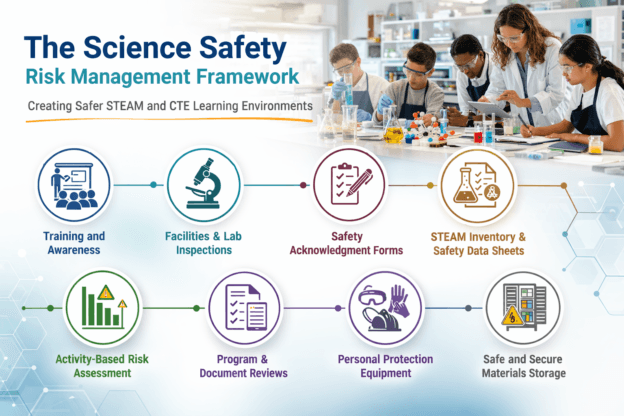
Safety is job one, and in a STEAM program it runs from the kindergarten classroom to the engineering lab. Science, technology, engineering, art and math each bring their own hazards, and one program covers all of them. It repeats every year, and it has eight parts: training, document review, student safety acknowledgment forms, activity-based risk assessment, protective equipment, a chemical inventory with Safety Data Sheets, facility inspections, and secure storage.
Training is the employer's duty under OSHA, every year at a minimum, with a safety item on every monthly department meeting agenda. Administrators are trained too. A principal who answers a smoke-filled chemistry room with "it is supposed to smell" is not.
The 2020 national study: eighty percent of science and STEM teachers reported an injury in the past year. Fifty-one percent of schools have had an injury that led to litigation. Thirty-five percent of teachers had no formal safety training, and trained teachers were forty-nine percent less likely to have an accident. Classes over twenty-four students were forty-eight percent more likely to have one. Seventy percent of lab accidents happen in grade nine, the year students meet equipment and materials for the first time, so grade nine gets extra modeling and reinforcement.
Occupancy load is law, not a recommendation. The Life Safety Code, NFPA 101, allows fifty square feet net per occupant in a lab, twenty in an ordinary classroom. The number is usually on the architect's prints, and your fire marshal can close a lab that exceeds it.
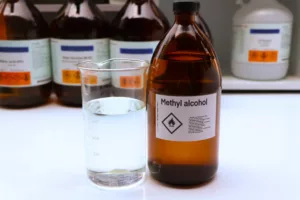
Take a look at this image from a safety perspective. There is a reaction going on, fizzing and gassing off, and if that lands in an eye it can blind. The student has safety glasses on. They do not cut it: open above the eyebrows, open at the sides. Indirectly vented chemical splash goggles close all the way around. The adult behind appears to be wearing ordinary prescription glasses, and the teacher is the leader of the pack; prescription glasses are not eye protection. No gloves: nitrile or vinyl, never latex, because you do not know who is allergic. No apron. The student is far too close to the reaction. And every container in a laboratory carries a label, water included.
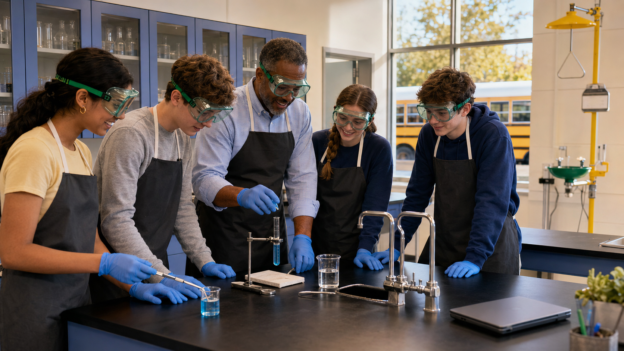
Another favorite, and a repeat. They have lab coats on, unbuttoned. No hand protection. And they are all smiling in their safety glasses. Many states have a goggle statute, and it is a law. Any liquid hazardous chemical means indirectly vented chemical splash goggles. Safety glasses are for physical hazards: slinkies in a physics lab, hand tools in a STEM lab, rocketry out on the field. A projectile is a physical hazard, and eye protection goes on everyone.
Before every activity and every demonstration, in sequence: hazard analysis, risk assessment, safety action. Then six practices. Review the Safety Data Sheet. Review every tool, machine and guard; a saw with no guard is shut down and signed. Review the procedure: concentrations, timing, waste and emergencies. Test-drive a new activity with a colleague after school. Substitute the less hazardous chemical. And ask whether the educational value outweighs the risk. A demonstration done for entertainment is where most injuries happen. Visiting speakers are vetted the same way. And never culture bacteria sampled from the school.
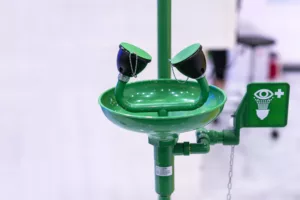
Every engineering control works before any activity. If the eyewash does not work, no chemicals in that room. If there are not enough goggles, no hands-on work, whatever anyone says about being held harmless. The teacher decides whether the room is safer, and is the one sued when it was not.
Seven questions for your district. A chemical hygiene plan and a hazard communication plan, both written? Teachers, supervisors and administrators trained? Annual inspections of every instructional space? Student safety acknowledgment forms, kept to your state's limit? Enough of the right protective equipment? A current chemical and equipment inventory? And are you comfortable being personally accountable?
Four questions came in from the audience. First: how do I determine the occupancy load of my laboratory? Measure the room, length times width. Measure every counter and piece of furniture and add those areas up. Subtract them from the room. Divide by fifty. That is the occupancy load, teacher included, and it is not the class size. Over ninety percent of the time the fire marshal's approved number is already on the architect's prints.
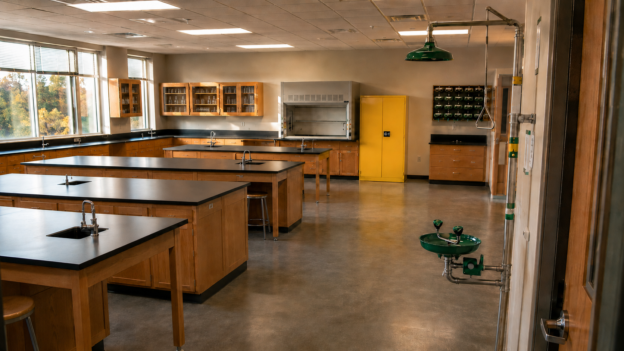
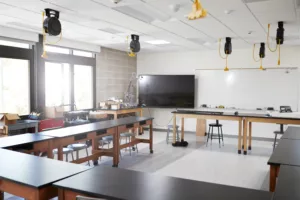
Second: what is the difference between a science classroom and a science lab? A lab has stations: sinks, water, gas, and the equipment for formal experimentation. A classroom has desks, perhaps a demonstration desk at the front. Demonstrations and some activities happen in a classroom, and the safety rules go with them.
Third: our chemical hygiene officer retired in 2021 and was never replaced. Should I apply? You already have one. OSHA says the superintendent holds the job until somebody is appointed, whatever that person knows about chemicals. If you take it, get a written job description signed by the district, compensation like a sports advisor or a reduced teaching load, and liability insurance of a million or more, plus your own professional policy.
Fourth: our district has us watch a ten-minute video in August and calls that the year's safety training. Is that right? No. Training to start is hours, not minutes; there is a safety item on every department meeting agenda; and before every lab and every demonstration, the safety steps are reviewed again. A ten-minute video is not training.
Job one is safety. Stay safer.
Science Safety presents risk management across the STEAM disciplines: one eight-part program every year; training as the employer's duty; the 2020 data on injuries, litigation, training, class size and grade nine; occupancy load under NFPA 101; two photographs with the faults called out (safety glasses at a fizzing reaction, a teacher in prescription glasses, no gloves, no apron, too close, no label; unbuttoned lab coats and smiling in safety glasses); the hazard analysis, risk assessment and safety action; six practices; engineering controls that work; seven questions for the district; and the audience questions on computing occupancy load, classroom versus laboratory, the retired chemical hygiene officer and the ten-minute video.
Don’t miss out on valuable information! Enhance your knowledge by checking out our catalog of webinars or visiting the Science Safety YouTube channel.