Watch this short video first. It is the five things a science or STEM department puts in order before the winter break: chemicals, housekeeping, living things, engineering controls and the papers, with the numbers that say why, and the four audience questions on a December inventory, white powder on bottles, safety glasses versus goggles, and a forgotten annual inspection.
Read the video transcript
Two weeks away from the building is long enough for a small problem to become a big one. Before the winter break, a science or STEM department puts five things in order: chemicals, housekeeping, living things, engineering controls, and the papers.
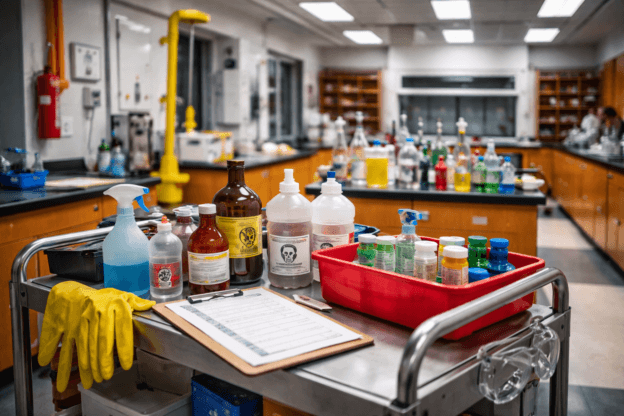
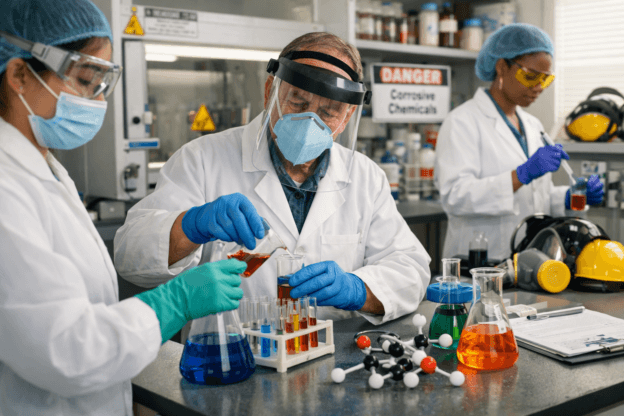
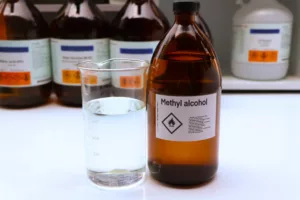
Chemicals first. Every bottle goes back to its proper storage location, nothing on a countertop, a cart or a shelf outside the lab. Broken caps, missing labels and damaged containers are dealt with now, not noticed in January. Cabinets are locked, incompatibles are apart, and flammables are in an approved cabinet, not a cupboard. The inventory is rechecked: what was used this term, what to order for the spring. A colored dot on a lid each time a bottle is used makes that count easy. Waste follows your chemical hygiene plan, and if a pickup is due, it is scheduled.
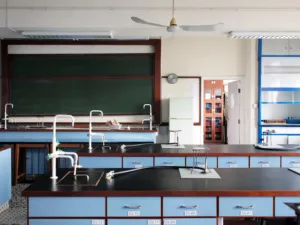
Housekeeping. Glassware washed and put away, the dishwasher run and emptied, broken glass in its approved box with a plan to remove it. The lab refrigerator checked, and no food or drink in it. Protective equipment cleaned, sanitized and counted. Floors and walkways clear, because custodians and maintenance staff will be in the room when you are not, around chemicals they do not know, and they need the same goggles and gloves you do.
Plants and animals. Enough water, light and warmth for the whole closure, and the heat not turned down in a room with living things in it. An animal that needs daily care goes home with a student or a teacher, with written instructions, a schedule, and check-ins.
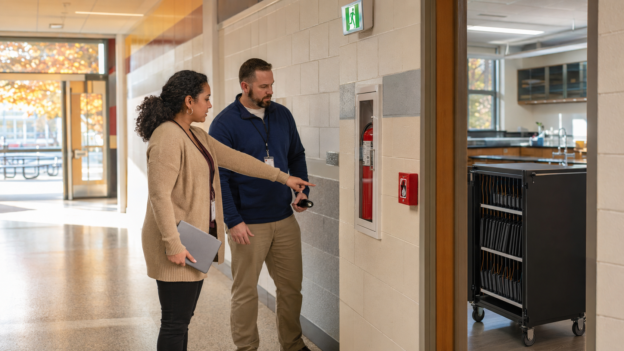
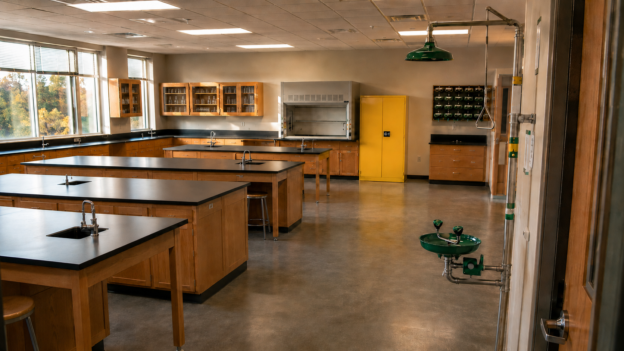
Engineering controls, tested before you go. The eyewash and shower run and inspected, their service tags current, anything out of date reported to the administration in writing. The fume hood emptied of everything, including waste; it is not a storage area. Its water and gas valves closed and the sash set. Extinguishers, blankets and sand buckets tagged and unobstructed. A cup of water down every sink and floor drain, so sewer gas cannot pass the trap. Lab, prep room and storeroom doors locked, cabinets locked, and the master shutoffs for electricity, water and gas closed for the holidays.
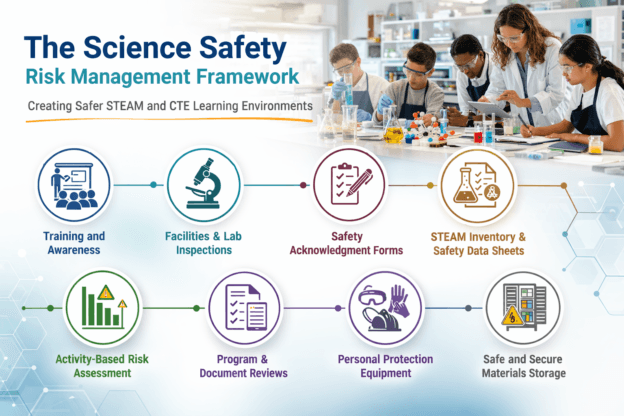
And the papers. The safety manual, the student safety acknowledgment forms, the chemical hygiene plan and the annual physical inspection are reviewed every year, and the break is the time to read them. The numbers say why: a 2021 study found thirty-five percent of STEM and CTE teachers had no formal safety training, sixty-nine percent used no safety acknowledgment form, accidents rose once a class passed twenty-four students, and fifty-eight percent could not recall their school's last annual inspection.
Four questions came in from the audience. First: our school only inventories chemicals in May or June. Is that acceptable? Legally, yes; the inventory is required once a year. The better practice is twice, before the winter break and before the summer, checking for damage, broken containers, lids and labels each time.
Second: there is white powder on the bottles in our storage cabinets. What is causing it? An acid and a base are reacting across the cabinet, and the product is salt and water. Separate the acids from the bases, store concentrated sulfuric and nitric acid on their own, and clean the salt off the bottles with trisodium phosphate.
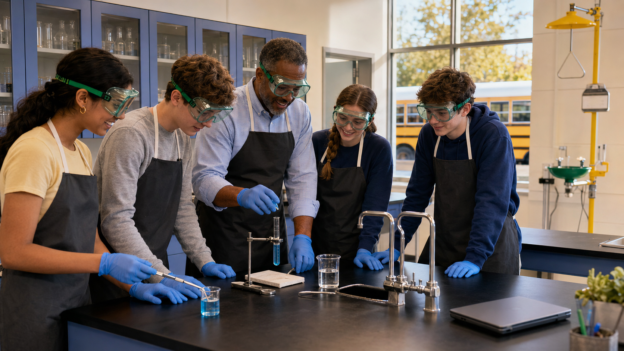
Third: we have safety glasses. Do we need goggles? Safety glasses with side shields serve a physics lab, where the hazard is a projectile. Chemicals, liquids, heat or glassware need approved, vented chemical splash goggles. Buy the goggles and you have both covered.
Fourth: nobody can remember the last physical safety inspection of our labs. The occupational health and safety rules require one every year, of the labs, the prep rooms and the chemical storerooms, walked by the chemical hygiene officer, a school administrator and the science teachers against a checklist: the safety program, the engineering controls, protective equipment, fire safety, training records and chemical management. If it has not happened, schedule it now.
Leave it safer. Come back to it safer.
Science Safety presents December recommendations for science and STEM departments: every chemical back in locked, segregated storage with the inventory rechecked; glassware, broken glass, the refrigerator, protective equipment and clear floors for the custodians; water, light and warmth for plants and animals; eyewash, shower, fume hood, fire equipment, drains, locks and shutoffs tested before you go; the safety manual, acknowledgment forms, chemical hygiene plan and inspection read over the break; and the audience questions on a twice-yearly inventory, white powder from acids and bases, glasses versus goggles, and the annual physical inspection.
Don’t miss out on valuable information! Enhance your knowledge by checking out our catalog of webinars or visiting the Science Safety YouTube channel.