Join Science Safety on a journey of making accommodations for students with additional needs in hands-on science, STEAM, and CTE programs.
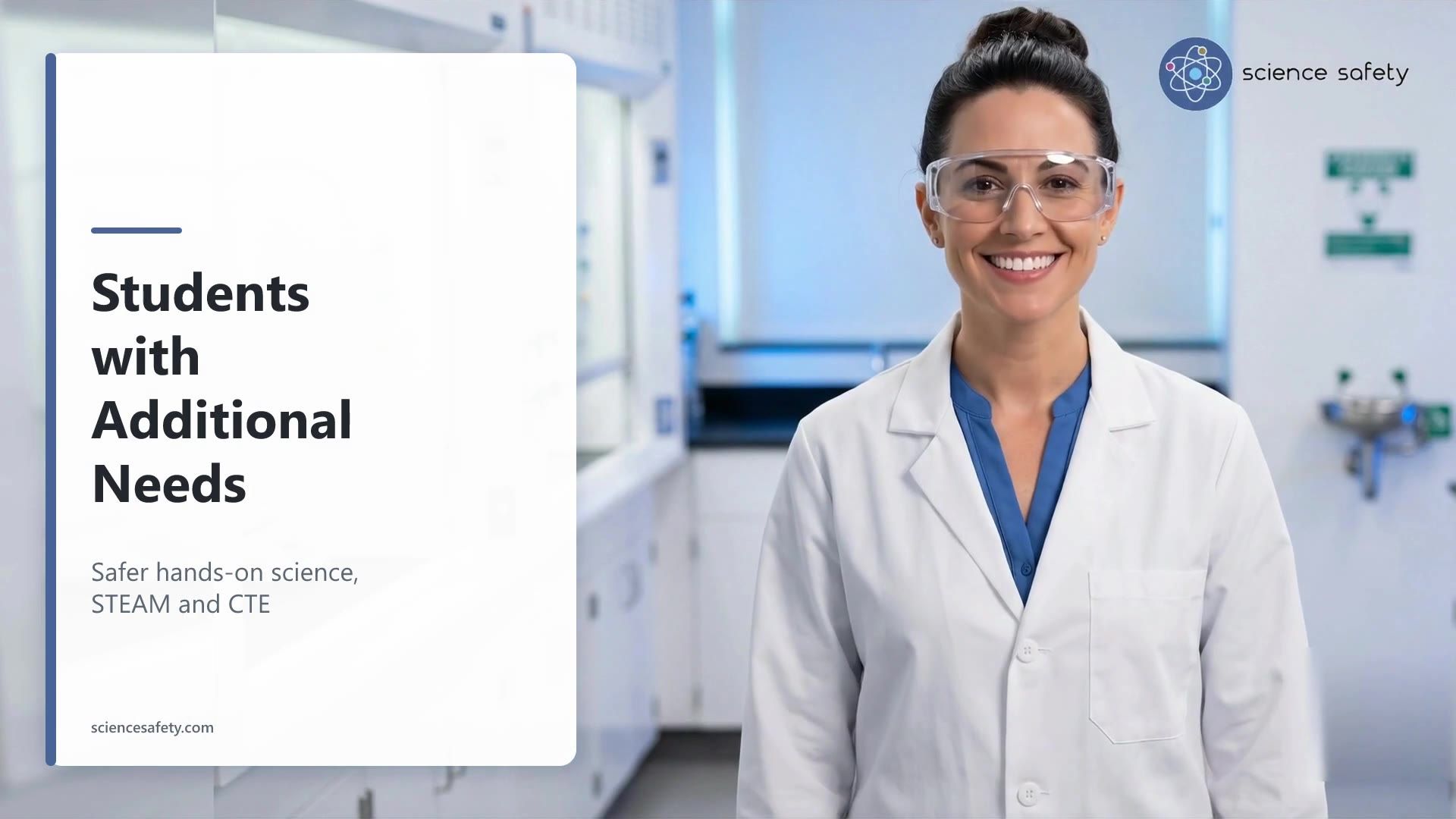
Watch this short video first. It takes the question every teacher asks about accommodating students with additional needs and answers it from the safety side: what can change, what cannot, and how to make the laboratory safer for every student.
Read the video transcript
Hands-on science, STEAM and CTE programs are where students learn by doing. For a student with additional needs, that is exactly where the learning is richest, and where the hazards are real. So let's start where every safety conversation starts. Not safe. Safer. Accidents can still happen. Training, planning and clear protocols make them far less likely.
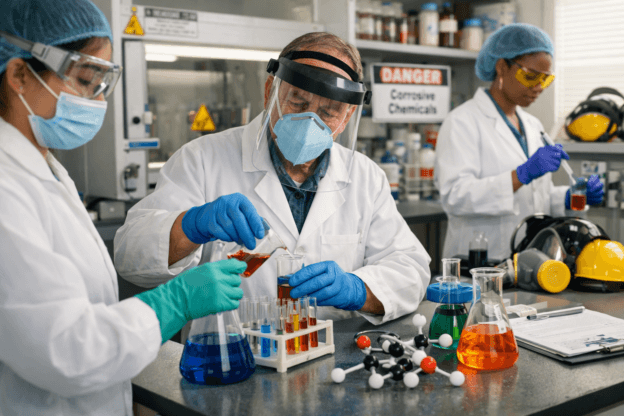
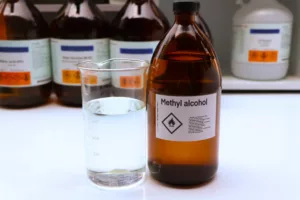
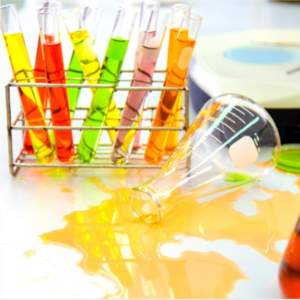
A laboratory holds three kinds of hazard. Physical hazards, from a meter stick to a table saw. Chemical hazards, in chemistry and biology above all. And biological hazards. A lab carries more risk than any other classroom, so it needs more attention, not less.
One statement should guide every decision you make. Students with disabilities are not presumed to be unsafe. With the right support they meet their learning potential in the laboratory, and many go on to careers in laboratories at universities, agencies and companies.
There is a difference between an accommodation and a modification. An accommodation changes how a student reaches the expectation. It does not lower it. A modification changes the expectation itself. For safety, the content and the required skills cannot change. The way a student approaches the work can.
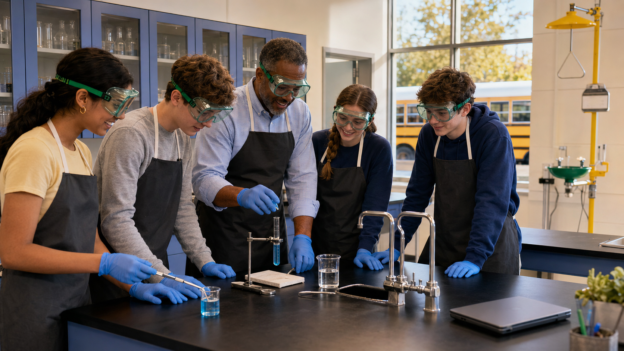
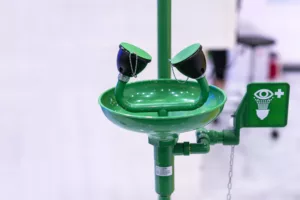
Here are the strategies that make a lab safer for everyone. Provide a reliable lab partner. Allow extra time for setup, the hands-on work and the takedown. Give instructions in writing, out loud and in pictures. Demonstrate every procedure, then give students time to practice it before they pick up the equipment. Build in brief breaks. Seat the student where distractions are fewest and the exit and the eyewash are closest. And let students use assistive technology.
The safety test may be read to a student. The student must still show they understand and give correct answers, because everyone in that room is responsible for their own safety and the safety of those around them.
There is no one-size-fits-all solution. The accommodation for a student in a wheelchair does nothing for a student with a visual or hearing impairment. So before each activity, do the three-step method for that student. A hazard analysis. A risk assessment. And a safety action. If the activity cannot be made safer, the safety action is to replace it.
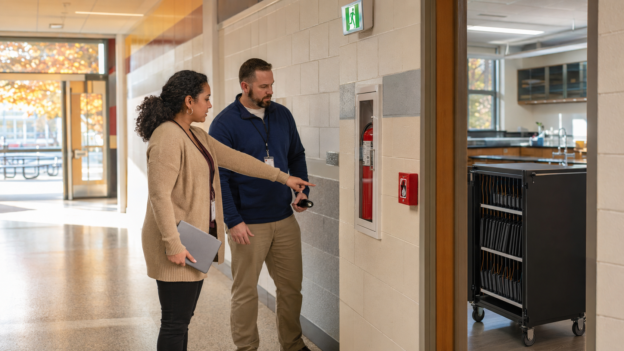
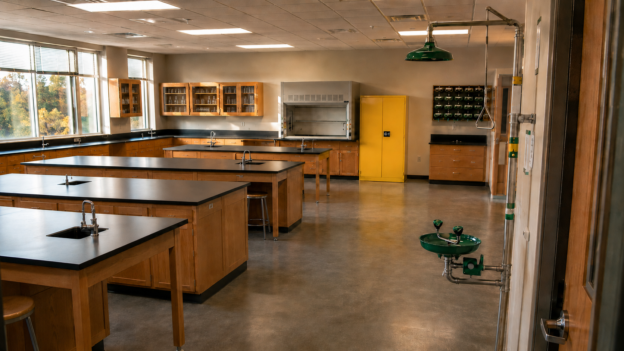
Think about what the student's position changes. A student seated in a wheelchair works at eye level with chemicals and is first in line for a splash. A student with impaired vision or a weak grip may need larger glassware, not microscale. A fire plan must be revised for a student who cannot see the route, with a designated assistant. And measure the time it takes that student to reach the eyewash, the shower and the exit. Shorter is safer, so seat them near the front.
Ask the school nurse, in writing, about allergies before the first lab. Latex hides in gloves, aprons, goggle straps, tubing and stoppers. Use nitrile or vinyl instead.
Three things to remember. Not safe, safer. No one-size-fits-all. And put it in writing. If you cannot accommodate a student's needs, the student does not do that activity. And whenever you raise a safety need with your administration, write it down and keep a copy.
Safer, for all of your students.
Science Safety presents practical classroom and planning strategies for an equitable and accessible laboratory experience for exceptional students: the difference between an accommodation and a modification, the safer-lab strategies that work for everyone, one hazard analysis for each student and each activity, what a student’s position in the room changes, and the one question to ask the school nurse in writing.
Don’t miss out on valuable information! Enhance your knowledge by checking out our catalog of webinars or visiting the Science Safety YouTube channel.